Looking for ways to save money and be money smart? You’ve come to the right place, check out our saving tips and guides on how to get your finances in tip top shape!
Over the next two months Revolut customers will be offered Irish IBAN numbers for the first time. Although this may sound like a technical change, it’s actually big news.
Why?
Irish IBAN’s were the last thing holding back the two million + Irish Revolut holders from ditching their current accounts with the traditional Irish banks.
Current account switching has been non existent in recent years with the latest figures released by the Central Bank indicating only 0.03% of customers switching their Current Account per year.
Now Revolut customers can simply get their salary paid directly into their Revolut account making dumping the traditional banks much easier.
Technically speaking they should of been able to do this without Irish IBAN numbers under the Single European Payments Directive (SEPA), however many Irish employers never got round to upgrading their IT systems which meant the Lithuanian IBAN used by Revolut before today’s announcement often wouldn’t work.
The Rise of the Digital Banks
Revolut has gained market share more rapidly in Ireland than in any other market in Europe, due to the lack of innovation from incumbent banks, with Ireland now providing almost 10% of Revolut’s world wide customer base.
Other overseas digital banks such as German based N26 and the Dutch based Bunq have also entered the market recently hoping to capitalise on potentially complacency in the traditional Irish banks. Bunq launched Irish IBANs late last year and are also growing rapidly.
These Digital or ‘Neo’ banks, offer lower charges, slicker interfaces and a bevy of features like share trading, crypto trading, junior accounts and saving vaults, that aren’t available from the traditional banks.
With salaries now likely to flow into these accounts, balances are set to rise rapidly opening the door for the digital banks to add the much more profitable lending services such as consumer loans or mortgages.
Competition On The Horizon?
There are still hurdles to this happening, with the famously bureaucratic Irish Central Bank still standing in their way.
With pressure mounting though it now seems that a tipping point may have been reached and real competition across all banking services may finally be on the horizon.
The continued boom in multinational companies corporation tax receipts have led to a billions of euro surplus in the Irish tax take.
Just ten big tech companies now provide over 10% of our tax income.
So if Facebook, Apple, Google and co upped sticks and moved out, it would blow a huge hole in our national finances.
That’s why the government has committed to moving €6 Billion of those extra revenues into the national reserve ‘rainy day’ fund.
Unlike our closest neighbors we are still in the fortunate position of being able to cut taxes and increase spending while doing this.
The total package announced was €11 Billion in total, €4.1 Billion on once off measure mainly focussed on supports for the cost of living crisis and €6.9 Billion in permanent measures.
Income Tax
The most significant structural change announced was increasing the level at which the 40% tax band kicks in from €36,800 to €40,000.
This means €3,200 more will now be charged @ 20% instead of 40%
This means €640 a year less tax for anyone earning over €40,000
This is one of the biggest tax reductions in decades, leaving 70% of Irish taxpayers paying income tax at 20% or less.
Personal tax credits & Employee tax credits up by €150 per person
€1,700 to €1,775 personal tax credit
€1,600 to €1,700 carer tax credit
With the top USC band of 4.5% threshold now increased by €1,625.
€12,012- €21,295 to €22,920
€1,625 up difference @ 2.5% lower = €41
All in the average taxpayer will be €831 better off with these changes.
Cost of Living Supports
Energy
All households will receive a €600 credit.
To attempt to target more support to those that need it most an additional
€500 will go to those on the working family allowance
€200 on the living alone allowance
€400 more on the fuel allowance, with expanded eligibility for an extra 80,000
Pensions a ‘double double’ payment of €253
Welfare a ‘double double’ payment of around €200
Education and Child Care
Extra €140 per child for those in receipt of child benefit will be paid in November
€175 a month reduction in child care costs, around 25%
Free school books for primary school kids
3rd level fees will be reduced by €1,000 and by €500 permanently
Student grants to increase 10-14% depending on income
Health
Free GP Care expanded to with an extra 430,000 included
Free care extended to 6 and 7 year olds
Free contraception for women extended from 17-25 to 16-30
Removal of VAT on all period products
Removal of the €80 a day hospital inpatient charges
Cigarettes up by 50c a packet
Housing
€500 Rent tax credit for ‘22 and ‘23 for 400,000 renters
Social Welfare
All social welfare rates to increase by €12 a week
€500 payment for carers and people with disabilities
Summary
The budget package announced yesterday is one of the largest increases in the state’s history.
Given it is largely funded by the big tech corporation tax windfall, the key decisions though were about where the money went rather than the size of the package itself.
There was no real attempt to restructure our economy to wean it off the drug of corporate taxes by supporting indigenous industry.
Instead the focus was either on handouts to help or handouts to buy votes depending on your point of view.
The less well off in our society have benefitted the most with €624 more on welfare payments, which includes pensions and additional once off payments, totting up to almost €2,000 for most.
The average national wage in Ireland is currently just over €50,000, so many taxpayers will benefit to the tune of €830 from the tax tweaks as well as the €600 energy payments.
Where there is a bit of a blind spot though is in those not receiving welfare payments, but earning below €40,000. A lot of the so called ‘box room’ generation still living with their parents and earning under €40,000 will miss out almost entirely. It remains to be seen if leaving this group of potential voters out in the cold is a wise move for the current government.
The impending Ulster Bank closure and the pull out of KBC this year from the Irish market is set to cause significant customer disruption.
There are over 1 million accounts and an estimated 500,000 customers with Ulster Bank and a further 300,000 with KBC. Dwarfing the scale of previous bank closures from Anglo, Danke Bank etc..
Closure notices for Ulster Bank customers are drop through customer’s doors by the end of March 2022 giving Ulster bank customers 6 months to switch to another bank, before your account is closed.
If you don’t switch by then, you will be simply issued a cheque with your remaining balance.
If you a have a mortgage with Ulster Bank this is set to be transferred to PTSB, but with PTSB’s rates some of the highest in the market it probably makes sense to look at switching that as well.
So what options are left for best current account, savings and mortgage?
Don’t panic there are some better and less expensive options out there than Ulster Bank and switching may not be as difficult as you think.
Switching Current Account – Ulster Bank Closure Ireland 2022
Best Digital Only Bank
If you don’t need to lodge cash or cheques then the Digital only banks N26 or Revolut are great options.
They have no monthly fees, the lowest once off fees and the best apps on the market. With features from kids accounts to trading in bit coin already built in and a really slick user experience.
They are also both covered under the EU Deposit Guarantees up to €100,000 the same as the non Digital banks.
One thing to watch out for though is some employers on old payroll systems may struggle with the EU Iban. This will only be a minority of employers however as under EU law everyone should have upgraded their payroll systems a number of years ago to be SEPA compliant.
Revolut already has 1.7 million customers in Ireland and recently became a full bank, so that’s why they are our pick of the bunch.
However, if you still need to lodge cash or cheques you have two options. Get someone with a traditional bank account to do it to their account and then send you the money or get yourself a traditional account from one of the banks below.
Traditional Banks
If digital only isn’t an option for you there are now 5 other more traditional banks you can choose from for your current account. The interest on all these accounts is pretty much irrelevant as it is so low, so what you are looking for is low fees.
If you don’t use your ATM regularly An Post or your local Credit union may be a good options. Both of these come in at €60 a year in fees. However, An Post charge 60c per per withdrawal and your Credit Union will charge around around the same so this can mount up quickly if you head to the cash machine once a week.
In that case we would recommend PTSB’s current account. It’s slightly more pricey at €72 a month, but withdrawals are free.
Switching Saving Accounts – Ulster Bank Closure Ireland 2022
Deposit interest rates are at record lows of around 0.5% with inflation heading for 8% or more, you should probably look at talking to a financial advisor if you have €10K or more to invest.
Investments can yield 4% per annum or more depending on the risk level and can help take the edge of inflation.
If you still want the security of a guaranteed rate the best rates are to be found from banks outside of Ireland. You can access rates up to 1.15% from banks across Europe on raisin.ie or consider a state saving account with around 0.6% interest rates.
If you have less than €10,000 squirrelled away then you may be better off leaving it or transferring it to your current account. The Digital Banks offer the ability for you to separate from your daily account with ‘vaults’ or ‘money jar’ features on their apps.
Switching Mortgages – Ulster Bank Closure Ireland 2022
Ulster Bank have sold their existing mortgages to PTSB and KBC to Bank of Ireland. This means if you have a mortgage with either you and your mortgage will transfer.
PTSB and Bank of Ireland have the highest mortgage rates in the market so many Ulster and KBC customers are considering switching to a different lender. If you are in your fixed rate period then PTSB and Bank of Ireland will have to honour those rates, but after that they could choose to hike rates increasing your monthly repayments.
Ulster’s non tracker rates range from 3.5% to 3.9% which are already some of the highest in the market.
So a typical Ulster mortgage customer on their 3.5% variable rate, with €150,000 remaining over 15 years would save €106 a month by switching to the best deal on the market, that’s more than €19,000 over their remaining term and would avoid the risk of a future rate hike.
Avant Money are offering €1,500 upfront for anyone switching their mortgage from Ulster Bank or KBC. The offer is available until the 31st of March and targets customers thinking of switching from Ulster & KBC as both exit the Irish market this year.
Switching costs are usually around €1,500 for solicitor and valuation fees combined, so this offer will make switching from Ulster and KBC effectively free.
At moneysherpa for example we offer an all in legal package including all outlays for €1,200 including VAT, while estate agent valuation fees are typically around €200. So €1,400 all in.
The repayment calculation is based on switching to Avant Money’s 5 Year fixed rate and using the switching offer to cover their upfront costs.
If you are a tracker however, sit tight. Any new owner will have to honour your existing terms.
You can see how much higher PTSB and Bank of Ireland rates are in the table below.
[mortgage_rates_var_followon_ltv_compare]
Switching Next Steps – Ulster Bank Closure Ireland 2022
If you have an account with Ulster Bank you will have to switch it in the next month, so act now to beat the rush.
Best Current Account – Revolut
Best Savings Account – Raisin.ie
When it comes to mortgages Ulster didn’t have great rates to start with (3.5%-3.9%) and have now been bought out by one of the banks with the highest mortgage rates in the State, PTSB, so now is a good time to switch to save now and to avoid higher rates down the line.
This applies for anyone with with a variable rate around 50% of Ulster Bank mortgage holders. If you are still in your fixed rate period then sit tight until you are 3 months from the end then speak to a broker. If you are on a tracker don’t worry, the new owner will have to honour your existing terms.
Read on to get the best student money tips available to Irish teens. As a teen myself I spent hours looking for the best financial advice specifically for teenagers, both online and from people I know.
After investigating I have found that as a teen you are taught little about finance, this lack of knowledge can leave many teenagers strapped for cash and struggling to afford basic necessities. This article aims to help fill in the gaps for teens where the education system comes up short.
The really great news is it’s not as hard as you think to get into good money habits. With the right information and coaching, teen finance won’t be a problem.
Here’s the 5 financial tips to make you the teenage Elon Musk.
As a teen, you’ve probably heard this a thousand times, time is money. Literally, all you need is time to make money.
Just lump a bunch of money into a long term investment and watch your money grow. Teenagers don’t have much resources available to them but generally teens and older people alike don’t realise how valuable time is because of something called compound interest.
Most people don’t realise the power of compound interest where your returns in year 1 boost your returns in year 2 etc..
When your young is the perfect time to start long term investing, but you should always get help from parents or professionals before investing in things like crypto or the stock market as you could lose all your money. Stupidly putting your money in Dogecoin could mean being in severe debt by the time you hit college.
Short term investing is often compared to gambling because the stock market and crypto are extremely unpredictable. Famously a monkey was able to make more money from the stock market than 9 out of ten professional traders on the stock market.
Long term investing is much safer and has bigger rewards. It’s a win win.
2. Track your Spending – Student Money Tips
Although this might seem insignificant, believe me when I say keeping track of the stupid things you’ve impulse bought really helps you avoid dumb purchases in the future. Its also useful because in a lot of cases you don’t realise what’s draining your bank account, things like going out too much to a snickers addiction can make your money disappear without you even realising it.
Always remember how much you have in your bank account before buying non essential items, You don’t want to go without heat for a week because you decided to have a drunken pool noodle fight with your roommates.
3. Not all debt is bad debt – Student Money Tips
It should go without saying, being in debt to things like payday loans is just terrible, but debt like mortgages generally can’t be avoided and have a relatively low interest rate compared to other loans. If you go your whole life without debt like mortgages, chances are you’ll be homeless due to how expensive houses are nowadays.
This doesn’t mean you should welcome all debt with open arms, as taking out loans for luxury items will always come back to bite you due to high interest rates, but if you’re starting up a business or taking out a loan for investments, debt should be worth it.
4. Go to College/University – Student Money Tips
There is a lot of stigma about people not being able to afford College and Universities, but that generally comes from the States as their prices for University is about 40`000 a year whereas in Ireland its about 3000 a year. 3000 is still a lot of money and chances are to afford living and tuition fees you’ll need to be extremely money smart but the pros of going to college vastly outweigh the cons.
Non grads have almost twice the unemployment rate as people who have gone to college and make on average around 10000 less. You may have also heard of super rich business men like Mark Zuckerberg and Bill Gates dropping out of college as well but you must remember again that they’re American where the prices of college are much higher and most people who drop out will not make as much as people who went to college. They also left to start the businesses that made them the billionaires they are today.
5. Get a Summer Job – Student Money Tips
If you are a college student, a summer job is basically essential to afford tuition and living costs. Not have a nervous breakdown over being able to afford a sandwich for lunch is amazing and helps you focus more on your studies.
It also helps to have a diverse and full portfolio for your cv when you go into the world of work. Employers like to see that you have experience working no matter what the job is and they also like jobs that show you have a multitude of skills.
What’s next – Student Money Tips
So to summarize,
1. Don’t take your time for granted, it’s extremely valuable.
2. Always remember what you spend your money on, make a budget with this information.
3. Not all debt is bad, some debt just helps you make more money further down the road.
4. Going to college is basically essential to get high paying jobs
5. A summer job should really help with finances and getting a job in the future.
If you want more help with money saving and investing for the future check out our other money saving articles.
Financial literacy is crucial to having successful financial outcomes, yet only 55% of people in Ireland understand 3 out of the ‘big 4’ financial concepts [1]. This is almost 20% lower than in the UK, Germany, Denmark, Sweden and the Netherlands.
Drilling into the data for Ireland the new moneysherpa study has three main takeaways.
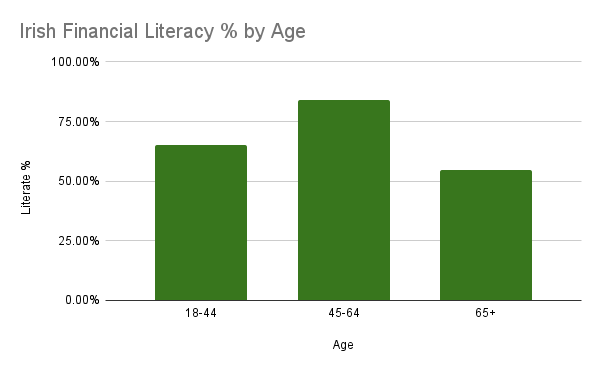
The 18-44 age group is 20% further behind the curve than older age groups
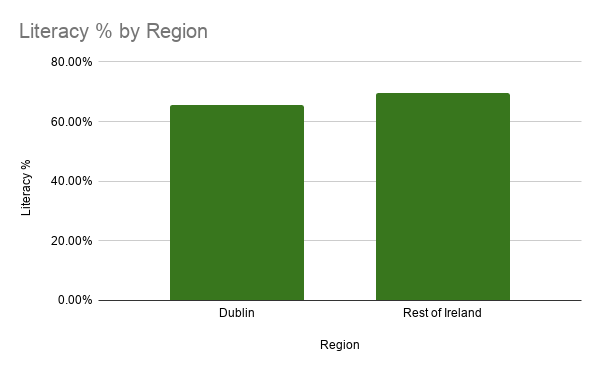
Dublin lags rest of the country for financial literacy
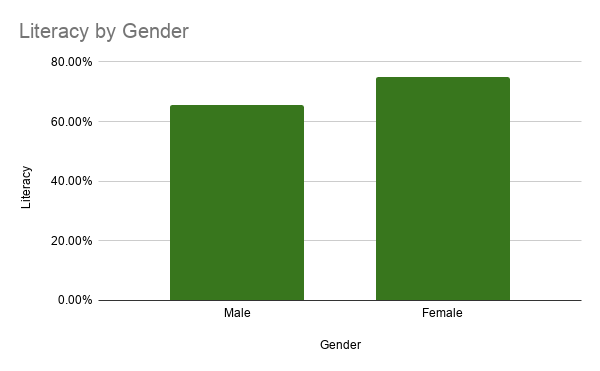
Unlike findings in most other countries Irish women are 15% ahead of men when it comes to financial savvy
Financial literacy matters more now than ever. According to a recent survey conducted by Laya healthcare, the single biggest source of worry for Irish people today is financial worry [2].
In an increasingly dog eat dog financial world where traditional safety nets like defined benefit pensions and jobs for life have fallen away, Irish consumers need to be able to financially fend for themselves.
Yet study after study has shown we are singularly unprepared for this task, with young people in particular lacking the basic skills and knowledge to make smart financial decisions.
Anne Richards, CEO of Fidelity International one of the largest financial providers in the world, believes real world money maths matters “Armies of people leave school knowing their SOHCAHTOA [trigonometry]” she said “perhaps teaching children and young students the building blocks of how mortgages, credit cards, insurance and pensions work … might be more useful.”
Financial Times
The good news is that these building blocks can be boiled down to just 4 fundamental concepts that are easy to learn and teach.
The ‘big four’ concepts you need to know
The 4 concepts behind financial literacy are very straightforward, yet over 66% of people worldwide failed to get 3 out 4 of them correct in the S&P Finlit survey.
Diversification, spreading risk to reduce the overall level of risk = “never put all your eggs in one basket.”
Inflation, the value of money isn’t fixed, it is simply a function of what you can buy with it.
Numeracy, 2 + 2 does equal 4, good basic arithmetic is the cost of entry for financial literacy
Compound Interest, is the interest you earn on your money, plus the interest it’s already accrued
The last one compound interest is a particularly slippery customer, because of the powerful mathematical process that lies behind it.
Albert Einstein is said to have called compounding “the most powerful force in the universe.”
“Compound interest is the eighth wonder of the world,” Einstein reportedly said. “He who understands it, earns it. He who doesn’t, pays it.”
The exponential growth curve that results from compounding is often hard for us to get our head around and the source of many financial mis steps.
Irish financial literacy survey deep dive findings
18-44 age group under prepared for financial decisions
The moneysherpa survey shows that the 18-44 age group are over 20% less financially literate than the 45-64 age group.
This is crucial as it is at this stage many of life’s critical financial decisions are made. Financial mistakes made before 44 are quite literally compounded as the years roll by.
By the time we reach our peak financially at 45+, the decisions we have made on our pensions and mortgage may have set us on a path that it is hard to break from.
Dublin lags the rest of the country in financial literacy
Generally financial literacy falls in line with economic development. As Ireland’s economic powerhouse you might expect Dublin to lead the country in financial literacy.
In fact Dublin financial literacy is 5% lower than in the rest of the country.
In a region with higher income levels and house prices, low levels of financial literacy could have long term consequences.
Irish women bucking world wide financial literacy trend
In countries rich and poor around the world financial literacy surveys have consistently shown women coming out around 15% lower than men in financial literacy.
This is usually attributed to cultural factors or access to education, reducing both financial confidence and knowledge.
Interestingly the Irish survey data shows women leading men in financial literacy by 15%. Turning the trend seen elsewhere completely on its head.
Maybe Brehon Law has something to do with it…
Test your own financial literacy
At this point you may be wondering how you would score for financial savvy. Our quickfire 5 question quiz tests you for the same concepts used in the survey and S&P Finlit report, gives you a score and will point you in the right direction if you get any answers wrong!
[formidable id=”28″]
In a nutshell – Financial Literacy
Financial literacy in Ireland is almost 20% lower than in other Northern European countries and is particularly low in Irish men aged 18-44.
Only 55% of people in Ireland understand 3 out of the ‘big 4’ financial concepts. Almost 20% lower than in the UK, Germany, Denmark, Sweden and the Netherlands.
The 18-44 age group is 20% further behind the curve than older age groups
Dublin lags rest of the country for financial literacy
Unlike findings in most other countries Irish women are 15% ahead of men when it comes to financial savvy
The moneysherpa financial literacy survey was conducted over 3 days from April 30th 2021. Using a statistically valid sample, weighted to align with Irish demographic data. The questions were based on the 2015 S&P finlit survey and various OECD reports. Irish data is given as comparative across segments only to allow for differences in data collection across the various finlit data sources used.
Worries about money are the single biggest cause of anxiety for people today. A third of all Irish adults say they have no savings, almost a half of us have no retirement savings. [1,2,3]
It doesn’t have to be this way. Our team of financial experts at moneysherpa, the Irish money guide, have developed a straightforward system to help you get money worry free. The sherpa’s 6 steps.
With the sherpa’s 6 steps we will get you on the right path to money zen. This means being able to afford what you need, having rainy day fund for emergencies and enough stashed away for retirement.
Which = no money worries.
Step 1 – The Irish money guide to picking your goals
Think about what might lie in your future that you need to set money aside for.
It might be a trip to the Bahamas, university for your kids, a dream wedding or a ‘forever’ home. Whatever these things are, list them out. Put them in order and put a money number on each, don’t over think it, a rough idea is fine.
This is your ‘sunny day’ goal, if you’re paying attention you may have already have guessed what’s coming next.
To banish those money worries you also need a ‘rainy day’ goal. This is a cash stash to help you deal with any unexpected financial downpours.
Finally you need to set your ‘play day’ goal. That’s how much you need to have a retirement that’s no work and all play.
These three goals are what achieving money zen means for you. Your personal money Everest.
You can make it to the top, with your own Irish money guide helping you at every step.
Step 2 – The Irish money guide to getting money fit
Congratulations, you’ve already done what the majority never do. You have picked your ‘mountain’. Let’s crack on helping you climb it.
Before we start climbing we need to get money fit.
This means getting more money in and letting less money out.
Getting more money in
There are more moves here than you might think.
As well as your main gig, have you thought about a side hustle? This can be doubly smart, as well as increasing your earning power, you can learn new skills and open up new career opportunities. There are a lot of online platforms such as upwork that make earning on the side easier than ever.
Finally, don’t forget to make sure you get all the tax reliefs you are entitled to. The average cash back on an Irish tax return is just under €1K. [4]
Letting less money out
There are just two ways to spend less, buy less and buy for less. To buy less, you simply have to reduce what you use. To buy for less, you need to shop around.
Check our Irish money guide 10 top money saving expert tips, which tells you how to save over €12,000 a year, even if you are on an average wage.
Step 3 – The Irish money guide to becoming debt free
Now we are money fit we should have more coming in than going out. Great, but before we start climbing our savings mountain, we need to get to our basecamp where we’re not ‘underwater’ with debt.
If you have no high interest debt, congratulations you are already there. Progress to step 4 of our programme, but if you have any personal loans, pay day loans or leave anything on your credit card at the end of the month, read on.
Saving whilst still having high interest debt is like climbing a mountain with a dead sheep on your back. Exhausting, uncomfortable and irritating, although hopefully a little less smelly. The first thing we need to do is ditch the debt and get that weight off your shoulders.
By taking the monthly surplus from step 2, we can start to pay down the debt. Start with the highest interest first, usually your credit cards. Starting with the highest interest debt first, creates a ‘snowball effect’ where you can use the interest rate payments saved to pay off the next highest rate of debt and so on.
Step 4 – The Irish money guide to ‘rainy day’ saving
So your fit, at basecamp and ready to climb, let’s go get our rainy day goal.
The sherpa recommends having at least three months of your net income tucked away for a rainy day. That way you can pay the rent and bills for a few months even if your income if cut short. Depending on how secure and zen like you want to feel, you might even make it six months.
Put this money away in a separate savings account that’s covered under the deposit guarantee scheme. It will get a lousy rate of return, but this is your emergency fund so we want to take no risks with it. The Irish scheme guarantees deposits up to €100K for each bank or credit union you have, EU banks have similar schemes, but you will have to check the rules for each state. [5]
Set up an automated transfer to move your savings each month from your current account to your rainy day fund. Keep saving this way until you have reached your goal and then move onto step 5.
Step 5 – The Irish money guide to ‘play day’ saving
Next up is having enough set aside for an active retirement, your ‘play day goal’.
This maybe surprising, but this is where the tax man helps you ‘level up’. Giving you back the tax you would have paid on your salary for every euro you save for your retirement.
If you are under 30, up to 15% of your income can be saved tax free. This gradually increases as you age, until you can save up to 40% of your income tax free at 60 or over. [6]
So if your income is taxed at 40%, every €1 of take home pay put into retirement savings is boosted to €1.67. This tax free boost makes savings via a pension a no brainer. Even if you just held cash in your pension, the tax benefit alone makes it a smart move.
With improved wellness and life expectancy, 65 is the new 45. Assuming you want to kick up your heels a little and do more than watch day time television, you need to put by around 15% of your income each year into a pension.
What you need to put by will depend on exactly how much working and how much playing you intend to do. If your plan is to retire to a mansion in Mayo and take up fly fishing, then you might need to up the 15%. If you want to keep your hand in at work past 65, you might need less.
For your play day goal you are saving over a long period, so there are lots of investment options from low risk to higher risk that should offer attractive growth. To set up a pension and work out what approach would best work for you, it usually makes sense talk to a qualified financial advisor. You can check out our recommended pension financial advisors near you here.
Step 6 – The Irish money guide to the final ascent
Congratulations! You are money fit, debt free and with emergencies and retirement sorted, money worry free.
Time to push for the summit, total money zen.
With your rainy day fund and play day fund already in place, you can use any remaining surplus for the final ascent.
How you use that surplus will depending on the size and timing of your Sunny day goal. If it’s a short term or small goal then popping it into a savings account might make perfect sense even though you will earn very little interest.
However, if it is a longer term goal like saving for your kids financial security it probably makes sense to invest to grow your money. You need to do this to combat inflation, the rate of reduction of how much you can actually purchase per euro.
You probably need to get a return of over 3% a year if you don’t want to lose money in real terms. As with a pension, the return will vary depending on the risk you are willing to take.
At this point you will need to consider investing to get returns. This usually means buying things that usually appreciate in value, known as ‘assets’. Investment assets include gold, bonds, shares and even rare collectables. Who knew a mountain of Grateful Dead t-shirts would end up being part of your financial strategy.
You probably need to buy a basket of different things to spread the risk, known as a ‘diversified investment portfolio’. There are lots of new digital platforms that now let you do this yourself. These platforms are attractive, because they don’t eat up much of your return in fees.
You may however simply want set your goals and appetite for risk, agree a plan with a financial advisor and let them manage the buying and selling of assets for you. The advisor usually charges around 1% of your fund per year, which if you are getting a return north of 5% or so might make sense due to the lower hassle factor. You can check out our recommended investment financial advisors near you here.
The Irish money guide to what’s next?
So you are at the summit of your own personal money Everest. You have achieved money zen. The feeling of having no money worries, with a huge sense of personal achievement and with the world at your feet.
To help you follow the sherpa’s 6 steps and reach money zen we have created a range of Irish money guide resources and tools.
Based on months scouring the Irish market for savings and our inside knowledge of the Irish finance world we’ve narrowed down this list to the top money saving tips that will deliver bang for your buck in 2024. We’ve used all these tips ourselves and they made a huge difference to our own bank accounts.
The really great news is it’s not as hard as you think to save money in Ireland in 2024. With many businesses moving online and comparison sites that will do the heavy lifting for you, big savings are often only a click away.
Most of what you read online is focussed on pouring over spreadsheets and logging your spend daily.
With these money saving tips, you will be able to take control and get saving with no spreadsheets required.
Here’s each money saving tip and how much you will save on average.
Keep reading to find out how to save over €13,000 a year.
Tip 1. Money saving Ireland – Get All You’re Owed (save €1,880)
How do I know how much tax back I’m owed?
There’s a smorgasbord of different tax reliefs you are entitled to as an Irish citizen or resident. The citizen’s information board is always a good place to start (link at the end of this article), but cutting to the chase the big ones are,
Home carer tax credit – €1,800
Medical or dental tax relief – 20% on expenses incurred
Working for home relief – up to 30% of your broadband and heating costs
And, for 2023 the Rent (€750) or Mortgage credit (€1,250)
Example average tax relief saving Ireland 2024 = €1,880
The good news is there are lots of online services out there, with the biggest being taxback.com, that will file the tax paperwork for you in return for a cut of the refund. The average money saving refund received by Irish consumers in 2024 was €1,880. Due to budget 2024 that’s likely to be even bigger this year.
This doesn’t include any benefits you might be entitled to, such as energy credits, working family payment or the fuel allowance.
Workers are in demand right now so you could also consider maximise your income by considering asking for a pay rise, changing jobs or working longer hours.
Next, once you’ve super sized what’s coming in, the next step is super shrinking what’s going out. You can do this two ways.
Buy for less
Buy less
Let’s start with the easiest, buy for less. Switching suppliers usually does pay off as companies know most people don’t bother to make the effort. This allows them to keep prices high for existing customers whilst offering sweet introductory deals for new customers.
The next three tips will take you straight to where you can save the most money in Ireland by switching in 2024.
Tip 2. Money saving Ireland – Switch Your Mortgage (save €3,250)
Contrary to what many think mortgage rates in 2024 are likely to be even higher in 2024 than they were in 2023. With the latest ECB survey of forecasters expecting tracker rates to be 0.5% higher in 2024 than they were in 2023 at 4.25% on average across the year, making the average tracker mortgage rate 5.4%.
There’s even worse news for those on variable or short term fixed rates as those rates are still expected to rise by a whopping 2% to 6% in 2024 as lenders put through ‘catch up’ increases to cover their increased funding costs. Short term fixed rate customers will flip on to the higher variable rates unless they take action now.
The good news though is that you can still fix long term at 4% by switching to the best rates in the market, which would save the average tracker or variable rate customer over €3,000 a year.
Check with your current lender to see if you can now ‘break’ from your current fixed rate for free, due to recent rate increases this is very likely to be the case.
Then talk to a mortgage broker who will find you the best rate, they are usually free to use so it always makes sense to get them to run the numbers and see if it worth your while to switch.
Example average mortgage switching saving Ireland = €3,250 per year
The average tracker customer switching to 4% on the average outstanding balance and loan term will save €1,428. The average variable rate switching to 4% on the average outstanding balance and loan term will save €3,276.
Tip 3. Money saving Ireland – Switch Your Energy Provider (save €723)
How do I save money by switching my electricity or gas in Ireland 2024?
Your electricity or gas service is the same no matter who you buy it from, the key thing then is to simply get the best price.
Lots of new providers have entered the market tempting switching with some great money saving deals. It couldn’t be more straightforward to compare and switch using one the comparison sites like Bonkers.ie or Switcher.ie.
Example average electricity and gas saving Ireland 2024 = €723 per year
The average home in Ireland uses 11,000 kWh of gas (at an average of 14.6c per kWh) and 4.2K kWh electricity (at an average of 46c per kWh) per year.
This means the average gas bill is now €1,606 and electricity now €1,917, or a hefty €3,523 combined.
The good news though is much cheaper rates are still available, with gas as low as 12.7c kWh and electricity as low as 36c kWh.
Switching to these lower rates would bring your gas bill down to €1,393 and your electricity bill down to €1,510, saving you over €700 on current rates.
Tip 4. Money saving Ireland – Switch Your TV Provider (save €456)
How do I save money by switching my TV in Ireland 2024?
With streaming services now offering not just box sets, but live TV as well there are big money savings to be made by ‘cutting the cord’ from old school TV providers.
Providers like Sky or Virginmedia typically charge around €35 a month for their entry TV pack, even though there is the same content available elsewhere for free. Ditch your current provider and get your sports and live TV from a combination of free to air & streaming, you will save hundreds and still get the same shows.
Example average TV saving Ireland 2024 = €456
Replacing Sky’s entry and Sky Sports pack at €77 a month with free to air, whilst getting your Sky Sports straight from the NowTV streaming service for €39 will save you over €456 a year. [5]
Next up, there are whole industries and armies of people whose job it is to get you to part with your hard earned cash everyday. The next three top money saving tips will help you avoid the traps and buy less in Ireland in 2024.
Tip 5. Money saving Ireland – Don’t blow it, Avoid the Urge to Splurge (Save €1,270)
How do I save money by avoiding non essential spend in Ireland 2024?
The best way to avoid temptation? Don’t put yourself in the way of it in the first place. Why do companies spend millions to push their ads, email lists, get your data, offer you easy credit and offer ‘one click’ payment options?
Yep, so you will spend more. Dun & Bradstreet found We are 12-18% more likely to purchase using credit over cash. [6]
As a savvy money saving consumer cut this off at source, don’t sign up to marketing or to one click purchases. Delete your cards from your phone and move your money by standing order every month to a separate savings account where you can’t get at it easily.
Example average saving by hiding the credit card Ireland 2024 = €1,270
Around €11,000 per household per year is spent on credit cards in Ireland according to the Irish central bank [7]. So according to the Dun & Bradstreet study switching this spend to cash would reduce this by 12% at least, saving €1,270 a year.
Tip 6. Money Saving Ireland – Go German (save €660)
How do I save money by going own label or to Aldi & Lidll in Ireland 2024?
The average Irish household spends over €5,500 per year on groceries [8]. According to research in the UK [12] the German discounters were around 12% cheaper than other suportmarkets and just as good quality if not better.
Example average own label saving Ireland 2024 = €660
Even allowing for the odd luxury in your basket, knocking a third off your grocery bill by switching to own label or the German discounters is pretty easy. This would give a saving of €660 a year for the average Irish household.
Tip 7. Money Saving Ireland – Become a DIY Barista & Chef (save €1,521)
How do I save money by paying for less everyday in Ireland?
When you buy a sandwich, coffee or get a takeaway you’re not just paying for the ingredients, but the whole cost of the seller’s business plus the profit that business is making.
According to Irish coffee house 3fe of the €3.50 you pay for your regular Americano only 50c is actually spent on coffee and milk.The rest goes on staff, rent, rates etc.. [8]
That makes it a staggering 7 times cheaper for you to make your regular latte or macchiato at home. I’m not picking on coffee, the same is pretty much true of any takeaway or eat out you can think of, it’s just a great money saving opportunity.
Example average DIY saving Ireland 2024 = €1,521
Irish households spend just over €1K per year on takeaways and eating out [9]. Add to that €7.50 every working day for you to pop out and grab a sandwich and you get just over €3K per year spent on takeaway food and coffees.
We aren’t going to deny you a weekend takeaway or lunch time pick me up, but if you cut by half you are looking at a hefty money saving of €1,521 you would be able to pop in the piggy bank.
Tip 8. Money saving Ireland – Cut Out Cigarettes & Alcohol (save €3,232)
How do I save money by reducing smoking and drinking Ireland 2024?
Known to Irish finance ministers for decades as the ‘old dependables’, beer & fags are the first place to go to raise tax revenues.
This has made both prohibitively expensive and also a smart go to when you want to raise your own bit of revenue by saving money.
The average Irish smoker spends over €2200 a year on cigarettes [10] and the average Irish drinker almost €2K are year [11].
Example average ‘old reliables’ saving Ireland 2024 = €3,232
Based on the averages if you drink and smoke and halve the beer and cut out the fags you would save a whopping €3,232 a year on average. Not to mention the health benefits of cutting down on both.
Next let’s get those interest payments down, nailing money saving tips 1-9, will help you get what you’re owed, buy for less and buy less. This gives you a lot more financial firepower, blasting open the doors on the final money saving tip.
How do I save money by reducing my credit card and loan debts in Ireland 2024?
Outside of your mortgage or student loans which are typically low interest, debt is a money saving blackhole to be avoided at all costs.
Irish households owe €8k on average in credit card and loan debt, paying the 4th highest rate of interest in Europe at 10.3%. [12]
The solution is to start paying down your debt, starting with the most expensive first, almost certainly your credit cards. This is the ‘snowball ‘ effect, where the savings from the interest on one loan can help pay off the next and so on.
Example average credit card and loan saving Ireland 2024 = €900
With the money savings from tips 1-9 coming to over €12K and the average Irish household debt at €8K, you should hopefully be able to pay off all your credit card and consumer loans. At the average interest rate of 10.3% that’s a money saving of over €900. Plus a big weight off the shoulders.
Finally, totting all the savings up from tips 1-9 gives a saving of €12,837, reaching our savings goal target of €12,500 of €7,500 for our rainy day fund and €5,000 for our trip to see Mickey.That puts you on a sound financial footing and on a plane to Florida for the trip of a lifetime.
Money Saving Ireland 2024 – In a Nutshell
So it’s been a money saving whirlwind tour alright,
€1,880 saved, getting what you are owed
€4,429 saved, buying for less
€6,683 saved, buying less
€900 saved, going debt free
€13,892 Grand total saved
Remember, we did all this using only the average national wage of €2,500 after tax, a bit of will power and some money saving smarts.
Money Saving Ireland 2024 – what should I do now?
These money savings are based on averages for Ireland, you will have to take your own case and work out what saving it means for you. You should also chat with a professional financial advisor for any big decisions or one of the state’s financial advice support services if you need help.
If you want to delve deeper into what you can save and how to do it (and why wouldn’t you?). Our other guides and money saving tools including our inflation savings buster tool how to switch your mortgage can be found here.
Lastly, if you are struggling to make ends meet, you aren’t alone. More than half of all Irish adults say financial concerns are a threat to their mental health.
If you are struggling with debt, making ends meet or just need some free independent advice, you should check out the state’s Money Advice & Budgeting Service (MABS) for further help.