moneysherpa

Tag: priority

Posts to be prioritised on the home page list

  • What Is Mortgage Drawdown And How Long does it Take? – Mortgage Drawdown Ultimate Guide Ireland 2022

    What Is Mortgage Drawdown And How Long does it Take? – Mortgage Drawdown Ultimate Guide Ireland 2022

    Congratulations you have your loan offer, but what happens next? Don’t worry we are going to guide you through the mortgage drawdown process with our Mortgage Drawdown Ultimate Guide Ireland 2022

    For most people this is a once or twice in a lifetime transaction. It can be stressful but ultimately it will be worthwhile. Your solicitor needs to make sure that they cover all legal and planning issues before mortgage drawdown so that there won’t be any problems when and if you decide to sell in future.

    The following guide will give you a better understanding of the mortgage drawdown process and how you draw down your mortgage.

    1. How Long Will The Process of a Mortgage Drawdown Last – Mortgage Drawdown Ultimate Guide Ireland 2022
    2. What Can Delay A Mortgage Drawdown – Mortgage Drawdown Ultimate Guide Ireland 2022
    3. What Happens When You Get The Contracts – Mortgage Drawdown Ultimate Guide Ireland 2022
    4. What Happens After You Get The Advice Letter – Mortgage Drawdown Ultimate Guide Ireland 2022
    5. What Do You Need When You Sign – Mortgage Drawdown Ultimate Guide Ireland 2022
    6. Are You Committed Once You Sign – Mortgage Drawdown Ultimate Guide Ireland 2022
    7. When Do You Close And When Do You Pay – Mortgage Drawdown Ultimate Guide Ireland 2022
    8. What Happens After Closing – Mortgage Drawdown Ultimate Guide Ireland 2022

    How Long Will The Process Of A Mortgage Drawdown Take? Mortgage Drawdown Ultimate Guide Ireland 2022

    First your own solicitor will need a copy of your loan offer, this should be sent directly to your solicitor by your lender, in what’s known as the loan pack. 

    Your solicitor will need the loan pack for the house you are purchasing before they can proceed, if it’s a switch they still need the loan offer pack. On average the loan offer takes 4/6 weeks to be issued by the lender.

    Most solicitors will not look at any other documents until they have received the loan offer as they don’t want to spend time on a purchase that might not go through. 

    If you want to speed the mortgage drawdown process up though, you can either undertake to pay the costs in the event of the loan not being received or find a solicitor who will waive their fee if the transaction doesn’t go through.

    This can speed up the process considerably, as you can be working on sale contracts whilst still waiting for your loan offer.

    What Can Delay Mortgage Drawdown ? Mortgage Drawdown Ultimate Guide Ireland 2022

    The issuing of contracts can be delayed if the Vendor’s Solicitor is getting deeds from a Bank (this takes between 10 and 14 days normally, but can take over a month) or if they are missing documents such as Certificates of Compliance. 

    Your solicitor will request these as they need to make sure that the house complies with all Planning and Title matters.

    The house deeds are always needed so requesting these as early as possible is essential in getting your mortgage draw down complete as soon as possible.

    It’s worth pushing your solicitor to act fast and move things along in parallel.

    Most solicitors don’t specialise in property conveyancing so are only part time on your house purchase. You might want to look for a solicitor who is 100% dedicated to conveyancing and allows you to track your completion process on line.

    moneysherpa recommend Jacob Law who specialise in conveyancing and have an online tool so you can upload your docs and track progress. If your switching they offer an all in price of €1350 including outlays and VAT.

    Solicitors are also a particularly cautious breed and while this can be a good quality in their role, encouraging them to act faster rather than hang on for all the t’s to be crossed and i’s dotted usually pays off.

    If your don’t move quickly vendors can pull out, lenders rates can change and your own circumstances may also shift, so it’s your job to push the solicitor as hard as you can to speed up the closing.

    What Happens When You Get The Contracts- Mortgage Drawdown Ultimate Guide Ireland 2022

    Once your solicitor has contracts and your loan pack, they read them and advise you about the property. They will also raise queries with the Vendor’s solicitor regarding the title. 

    They should send you a copy of any correspondence with the vendors solicitor. 

    What Happens After You Get The Advice Letter- Mortgage Drawdown Ultimate Guide Ireland 2022

    Once you get the advice letter from your solicitor you should make sure that you are happy with the advice given and your solicitor will chase for replies to the queries/questions they have sent to the vendor’s Solicitor.

    Once they reply and if the replies are ok, your solicitor will call you to arrange an appointment to go through the contracts and sign them if appropriate. 

    On average it takes two weeks to get replies and arrange to get contracts signed.

    What Do You Need When You Sign- Mortgage Drawdown Ultimate Guide Ireland 2022

    You need to pay the balance of the deposit on signing contracts and the cheque is payable to the Vendor’s solicitor. If you have not given your solicitor a copy of your driving licence or utility bills, as proof of identity and address, you will need to provide these at this point. 

    Your solicitor will then go through the contracts and loan offer and if you are happy then you sign the contracts. At this point you should get a definite idea as to the closing date from your solicitor. 

    Are You Committed When You Sign? – Mortgage Drawdown Ultimate Guide Ireland 2022

    Once you sign the contracts, they are sent to the Vendor’s solicitor for signing by the vendor. The contract is not binding until they sign and return one copy.

    This normally takes a week or two but it may be longer if the Vendor is buying another property or if there is a chain of transactions.

    When Do You Close And When Do You Pay? – Mortgage Drawdown Ultimate Guide Ireland 2022

    Once your solicitors have a copy of the contract back and know the closing date, your solicitor will email you details of what balance is required to close.

    You also need to make sure that all the documents necessary for drawdown of your loan are with your mortgage provider. 

    Once your solicitor has all the monies they will arrange the mortgage draw down. 

    The Vendor’s solicitor then sends your solicitor all the Title documents on trust and the purchaser’s solicitor will transfer monies on trust then carry out searches to make sure there are no judgements against the property or the vendors. 

    If everything is ok and you confirm that the house is vacant and cleared out, your solicitor will authorise the release of the monies and you can collect keys from the Auctioneer. 

    What Happens After Closing – Mortgage Drawdown Ultimate Guide Ireland 2022

    Your solicitor will arrange to stamp the deed and register the property. If you have an existing mortgage, they send your deeds to the Bank after the registration completes. If you do not have a mortgage, they will write to you to collect your deeds when they are registered.

    Summary – Mortgage Drawdown 2022, Ultimate Guide

    Mortgage draw down is a complex process so to summarise the steps that you need

    1. Review your loan offer conditions with your solicitor
    2. Request the house deeds from your current lender (if you are also selling or switching)
    3. Review the property contracts with your solicitor and sign
    4. Pay the outstanding deposit balance (if a new house purchase)
    5. Supply lender with any outstanding documents (mortgage protection etc..)
    6. Drawdown Mortgage

    The key tip is chase, chase, chase. Don’t let your solicitor drive the process, make sure you are pushing and getting all your docs in on time.

    The longer things take, the more that can go wrong.

    That’s why getting partners that know the process inside out makes a lot of sense. moneysherpa advisors work with the best completions and solicitors in the country to make sure you get the best and fastest route to mortgage drawdown.

    Next Steps – Mortgage Drawdown Ultimate Guide Ireland 2022

    If you want to find out more about how to get a solicitor you should check out our guide on legal costs and the best solicitors here.

    If you want to get the best solicitor for mortgage draw down, you can contact our recommended partners Jacob Law here.

    You can get in touch with a moneysherpa advisor here.

  • The Best Mortgage Adviser Ireland 2022, Ultimate Guide

    The Best Mortgage Adviser Ireland 2022, Ultimate Guide

    The process of applying for a mortgage can often be very daunting and filled with uncertainty, but not if you get the right mortgage adviser. Find out what to look for with our mortgage adviser ultimate guide Ireland 2022.

    mortgage adviser

    In this article, we aim to outline what a mortgage adviser is, why you should consider going to one, and how to find the best one for you.

    1. What is a Mortgage Adviser Ireland 2022?
    2. Why should I go to a Mortgage Adviser Ireland 2022?
    3. How do I find the right Mortgage Adviser for me?
    4. Summary Mortgage Adviser Ultimate Guide Ireland 2022

    Top Mortgage broker comparison

    Broker Free Google Rating All Lenders Partner Solicitor One on One Service Recommended by
    BestinIreland.com
    moneysherpa 4.9
    Irish Mortgage Corporation 4.9
    Doddl 4.8
    mortgages.ie 4.6
    Switcheroo 4.8
    Local Brokers €100-€500 3-5

    Updated 10/03/2024

    What is a Mortgage Adviser? Ultimate Guide Ireland 2022

    A mortgage advisor is a qualified professional who aims to find the best mortgage deal for you given your personal circumstances.

    With over 250 mortgage products offered by 9 different lenders in Ireland, it’s no wonder so many struggle to find the best mortgage for them, and end up going with a mortgage that could lose them thousands in the long run.

    A mortgage adviser will help you work out how much you can afford to borrow and use their knowledge of the market to find the best deal available.

    When looking for the best deal out there, a good mortgage adviser will;

    • Talk with you to figure out what you can afford to borrow given your financial situation
    • Search the market for the best deals available
    • Compare deals offered by lenders
    • Tell you about different deals to help you find one that best suits you

    Why should I go to a Mortgage Adviser? Ultimate Guide Ireland 2022

    There are many benefits to seeing a mortgage adviser, as a good mortgage adviser will;

    • Look at your financial circumstances to find a deal that best suits you
    • Use their knowledge of lenders to find ones that are right for you
    • Access exclusive deals not available directly
    • Help you with the paperwork that comes with applying for a mortgage
    • Help you find a deal that you are likely to get

    A mortgage advisor can help lift the burden that comes with applying for a mortgage.

    By using their connections and knowledge of the market, mortgage advisers can help find a deal that is affordable and right for you.

    Finding a deal yourself can be a long and difficult process. Mortgage advisers are there to save you time and effort, and may even be able to find you a deal you can’t on your own.

    How do I find the right Mortgage Adviser for me? Ultimate Guide Ireland 2022

    There are many factors you should take into consideration when looking for a mortgage adviser, such as;

    Type of mortgage adviser

    Mortgage advisers can either act independent or work on behalf of a lender. It’s important to know if you’re mortgage advisers is working for a financial institution, as this can impact their advice.

    It’s also important to see how many lenders your mortgage adviser works with, as mortgage advisers who only work with a certain amount of lenders can only offer you a limited amount of deals.

    An independent mortgage adviser will show you deals from many different lenders as they are not tied to only one, meaning you can choose from a wider range of lenders and deals.

    Fees

    Some mortgage advisers will not charge their clients, as they’re paid a commission based on the value of their clients mortgage once it has gone through.

    Yet some mortgage advisers may charge their clients a flat fee of €100-€150. Other advisers may charge their clients a commission based on a percentage of their mortgage. This can be a problem if you are looking to take out a large mortgage.

    Always ask mortgage advisers about their fees before deciding who to go with.

    Qualifications

    It’s important to find out what qualifications your potential mortgage adviser has. Before going with a certain advisor, check that they;

    • Are a Qualified Financial Adviser (QFA)
    • Are an Accredited Product Adviser (APA)
    • Are registered with the Central Bank of Ireland

    It’s vital that the advisor you go to has the right qualifications to give you accurate financial advice when it comes to your mortgage.

    Find out more on how the Central Bank regulates mortgage advisers here.

    Summary – Mortgage Adviser Ireland 2022, Ultimate Guide

    In short, mortgage advisors are professional financial advisers who are there to act in your best interests and find the best mortgage for you.

    Mortgage advisers help ease the stress of applying for a mortgage by figuring out what you can afford to lend, getting and comparing deals from lenders and finding the best one for you.

    Next Steps – Mortgage Adviser Ireland 2022, Ultimate Guide

    Broker Free Google Rating All Lenders Partner Solicitor One on One Service Recommended by
    BestinIreland.com
    moneysherpa 4.9
    Irish Mortgage Corporation 4.9
    Doddl 4.8
    mortgages.ie 4.6
    Switcheroo 4.8
    Local Brokers €100-€500 3-5

    Updated 10/03/2024

    We at moneysherpa have qualified financial advisors on hand to help you find the best mortgage deal for you. If choose moneysherpa as your mortgage adviser, you will;

    • Get our expert opinion free of charge
    • Have a wide range of options from a wide range of lenders, as we act independent from financial institutions
    • Have your paperwork dealt with digitally in one of our free online calls
    • Get comprehensive advice on all your options to find the best deal to suit your personal circumstances
    • Get our lifetime best rate guarantee, meaning our sherpas will always check the market to switch if we find a better deal for you
    • Have all your questions or queries answered by our team of professional mortgage advisers

    Start your application online with moneysherpa here

    You can book a free, no obligation video chat with the mortgage sherpa team here.

    Read more about the mortgage sherpa team here.

  • Should I Fix My Mortgage Ireland 2023? Ultimate Mortgage Fixing Guide

    Should I Fix My Mortgage Ireland 2023? Ultimate Mortgage Fixing Guide

    With runaway inflation across the continent the European Central Bank looks set to hike interest rates with the cost of Irish mortgages set to continue to rise as a result. 

    So the question your probably asking is should i fix my mortgage in Ireland 2023?

    should i fix my mortgage

    ECB rates have risen by a staggering 4.0% in the last year and are due to rise again when the ECB rate gurus next meet.

    The financial markets are expecting rates to have risen by at least 0.5% in the next 12 months, which would add a further €100 a month to the average Irish mortgage.

    The good news is that by fixing your mortgage rate now you can dodge the coming rate hike and probably cut your current repayments at the same time.

    The Irish mortgage market is almost unique in having fixed mortgage rates priced well below variable rates and over 140,000 variable, 240,000 tracker and around 200,000 fixed rate mortgage holders could save big by switching now and fixing on a lower rate, read on or check out our video explainer to see how much you could save and how.

    How much you could save by fixing? – Should I Fix My Mortgage Ireland 2023

    According to the latest Irish Central Bank figures available, the average variable rate in Ireland is around 3.8%, this is probably what you are on if you are with Bank of Ireland, AIB, Ulster, KBC and PTSB and not on a tracker which now average at 4.65%.

    If you are with any of these banks then you should look into switching to a fixed rate.  If you’re not sure about what rate you’re on dig out your annual mortgage statement, or take a gander at the table below.

    [mortgage_rates_var_followon_ltv_compare]

    So let’s run the numbers on an average outstanding loan of €200,000 and average outstanding term of 15 years. This is the case for Joe Average based on data from the Irish banking and payments federation.

    • Total monthly at variable rate of 3.8% = €1,459
    • Total monthly at a fixed rate of 2.96% = €1,372

    That’s a saving of €87 a month or €15,660 over the full term and that’s not even an extreme case, that’s just Mr Joe Average.

    However, that’s not even the biggest reason for you to switch.

    The no 1 reason to switch is that you will cap your repayments, protecting yourself from further rises.

    The Pro’s and Con’s of Fixed v Variable – Should I Fix My Mortgage Ireland 2023

    The bizarre thing is that fixed rates are usually a better choice for mortgage holders, even before you compare fixed versus variable rates savings, because they are less risk.

    For most people the certainty of knowing the payment at the end of the month won’t rise for 5, 10 or even 20 years far outweighs the risk that they might end up paying more than the going rate at some point.

    In fact that’s why fixed rates in other countries are usually more expensive than variable, they are effectively ‘insurance’ that your repayments can’t rise.

    Let’s take Mr Joe Average again who is on a variable rate of 3.8% paying €1,459 a month.

    Remember that expected ECB rate increase of 2%? The banks will pass that straight through to Joe increasing his variable rate to 5.8%.

    • Total monthly at variable rate of 3.8% = €1,459
    • Total monthly at variable rate of 5.8% = €1,666
      Total monthly at a fixed rate of 2.96% = €1,372

    If the ECB hike rates by 2% as expected, Joe’s monthly repayments on his variable rate will go up by €207 a month. Making his monthly repayments €294 more a month than if he had fixed for 15 years with Avant Money.

    There are still a couple of things to watch out for though with fixed rates. As well as the chance you could end up paying more if rates fall, you can also be penalised if you want to payback early.

    That said on rates falling, most experts expect interest rates to stay high for years to come and never to fall back to the super low rates seen between 2008-2022.

    Plus you might not have to pay a ‘breakout’ fee to get our of your fixed period. Under EU legislation the banks can only charge you the difference between the rate when you originally fixed and the rate when you look to repay. 

    Who Should I Fix With? – Should I Fix My Mortgage Ireland 2023

    For most people we advise switching to the non bank lenders. As new entrants these lenders offer attractive long term rates, but also the best variable rates once you come off your fixed rate period.

    This gives these mortgages a much lower average rate across the whole mortgage term, known as the APRC [1].

    We would also encourage you to fix for as long as you’re comfortable with. Although this may cost you more in the short term, the benefit of capping your repayments will out weight the extra cost for most people.

    The best fixed deals in the market across all 7 lenders and 290 mortgage products are shown below.

    Rank Mortgage Product Rate Value Repayment Security Ease of Approval Approval Speed Overall Rating
    #1. Avant Money Mortgage 10-30 Yr Fixed 4.25 5.0 4.0 5.0 4.58
    #2. Avant Money Mortgage 7 Yr Fixed 4.25 3.5 4.0 5.0 4.13
    #3. Haven Mortgage 10 Yr Fixed 3.5 4.0 3.5 5.0 3.95
    #4. Avant Money Mortgage 5 Yr Fixed 4.5 2.5 4.0 5.0 3.90
    #5. Haven Mortgage 7 Yr Fixed 4.0 3.5 3.5 3.0 3.55

    Rating Weighting: Rate 30%, Security 30%, Approval 20%, Speed 20%, updated 26/09/2023

    How to fix your mortgage rate – Should I Fix My Mortgage Ireland 2023

    The simplest way to fix is to get in touch with your existing lender and get them to move you to their fixed rate. 

    This option, although hassle free, is unlikely to deliver big savings as many of the fixed rates are reserved for new customers only and the best fixed rates in the market are with the non bank lenders like Avant Money.

    So the best way to fix your mortgage and save big is to switch your mortgage to one of these ‘non bank’ lenders. With regulation and new online platforms emerging in the last few years switching is now quite straightforward, most brokers will handle it for free as they are paid a commission by the lenders.

    In a Nutshell – Should I Fix My Mortgage Ireland 2023

    So should I fix my mortgage?

    Probably.

    With such uncertainty about interest rates right now almost everyone should look into fixing. Being able to cap your repayments against future potential interest rate rises, makes sense for almost anyone with a mortgage.

    Even those with trackers or on shorter term fixed rates need to think about if they can afford not to.

    If your on a variable though it really is a no brainer, you will save thousands and remove the worry around rising repayments.

    Next Steps – Should I Fix My Mortgage Ireland 2023

    You can read more about the switching process here or check out the best fixed rates here.

    If you’re on a tracker you can read our guide to switching from a tracker here or if you are in a fixed rate our guide to breaking your fixed rate here.

    If you need individual advice on the best options for you, you can book a mortgage call with a qualified advisor here.

  • Getting The Best Mortgage Advisor – Ultimate Guide Ireland 2022

    Getting The Best Mortgage Advisor – Ultimate Guide Ireland 2022

    The process of applying for a mortgage can often be very daunting and filled with uncertainty, but not if you get the right mortgage advisor. Find out what to look for with our mortgage advisor ultimate guide Ireland 2022.

    mortgage advisor

    In this article, we aim to outline what a mortgage advisor is, why you should consider going to one, and how to find the best one for you.

    1. What is a Mortgage Advisor?
    2. Why should I go to a Mortgage Advisor?
    3. How do I find the right Mortgage Advisor for me?
    4. Summary Mortgage Advisor Ultimate Guide Ireland 2022

    Top Mortgage broker comparison

    Broker Free Google Rating All Lenders Partner Solicitor One on One Service Recommended by
    BestinIreland.com
    moneysherpa 4.9
    Irish Mortgage Corporation 4.9
    Doddl 4.8
    mortgages.ie 4.6
    Switcheroo 4.8
    Local Brokers €100-€500 3-5

    Updated 10/03/2024

    What is a Mortgage Advisor? Ultimate Guide Ireland 2022

    A mortgage advisor is a qualified professional who aims to find the best mortgage deal for you given your personal circumstances.

    With over 250 mortgage products offered by 9 different lenders in Ireland, it’s no wonder so many struggle to find the best mortgage for them, and end up going with a mortgage that could lose them thousands in the long run.

    A mortgage advisor will help you work out how much you can afford to borrow and use their knowledge of the market to find the best deal available.

    When looking for the best deal out there, a good mortgage advisor will;

    • Talk with you to figure out what you can afford to borrow given your financial situation
    • Search the market for the best deals available
    • Compare deals offered by lenders
    • Tell you about different deals to help you find one that best suits you

    Why should I go to a Mortgage Advisor? Ultimate Guide Ireland 2022

    There are many benefits to seeing a mortgage advisor, as a good mortgage advisor will;

    • Look at your financial circumstances to find a deal that best suits you
    • Use their knowledge of lenders to find ones that are right for you
    • Access exclusive deals not available directly
    • Help you with the paperwork that comes with applying for a mortgage
    • Help you find a deal that you are likely to get

    A mortgage advisor can help lift the burden that comes with applying for a mortgage.

    By using their connections and knowledge of the market, mortgage advisors can help find a deal that is affordable and right for you.

    Finding a deal yourself can be a long and difficult process. Mortgage advisors are there to save you time and effort, and may even be able to find you a deal you can’t on your own.

    How do I find the right Mortgage Advisor for me? Ultimate Guide Ireland 2022

    There are many factors you should take into consideration when looking for a mortgage advisor, such as;

    Type of mortgage advisor

    Mortgage advisors can either act independent or work on behalf of a lender. It’s important to know if you’re mortgage advisors is working for a financial institution, as this can impact their advice.

    It’s also important to see how many lenders your mortgage advisor works with, as mortgage advisors who only work with a certain amount of lenders can only offer you a limited amount of deals.

    An independent mortgage advisor will show you deals from many different lenders as they are not tied to only one, meaning you can choose from a wider range of lenders and deals.

    Fees

    Some mortgage advisors will not charge their clients, as they’re paid a commission based on the value of their clients mortgage once it has gone through.

    Yet some mortgage advisors may charge their clients a flat fee of €100-€150. Other advisors may charge their clients a commission based on a percentage of their mortgage. This can be a problem if you are looking to take out a large mortgage.

    Always ask mortgage advisors about their fees before deciding who to go with.

    Qualifications

    It’s important to find out what qualifications your potential mortgage advisor has. Before going with a certain advisor, check that they;

    • Are a Qualified Financial Advisor (QFA)
    • Are an Accredited Product Adviser (APA)
    • Are registered with the Central Bank of Ireland

    It’s vital that the advisor you go to has the right qualifications to give you accurate financial advice when it comes to your mortgage.

    Find out more on how the Central Bank regulates mortgage advisors here.

    Summary – Mortgage Advisor Ultimate Guide Ireland 2022

    In short, mortgage advisors are professional financial advisors who are there to act in your best interests and find the best mortgage for you.

    Mortgage advisors help ease the stress of applying for a mortgage by figuring out what you can afford to lend, getting and comparing deals from lenders and finding the best one for you.

    Next Steps – Mortgage Advisor Ultimate Guide Ireland 2022

    Broker Free Google Rating All Lenders Partner Solicitor One on One Service Recommended by
    BestinIreland.com
    moneysherpa 4.9
    Irish Mortgage Corporation 4.9
    Doddl 4.8
    mortgages.ie 4.6
    Switcheroo 4.8
    Local Brokers €100-€500 3-5

    Updated 10/03/2024

    We at moneysherpa have qualified financial advisors on hand to help you find the best mortgage deal for you. If choose moneysherpa as your mortgage advisor, you will;

    • Get our expert opinion free of charge
    • Have a wide range of options from a wide range of lenders, as we act independent from financial institutions
    • Have your paperwork dealt with digitally in one of our free online calls
    • Get comprehensive advice on all your options to find the best deal to suit your personal circumstances
    • Get our lifetime best rate guarantee, meaning our sherpas will always check the market to switch if we find a better deal for you
    • Have all your questions or queries answered by our team of professional mortgage advisors

    Start your application online with moneysherpa here

    You can book a free, no obligation video chat with the mortgage sherpa team here.

    Read more about the mortgage sherpa team here.

  • Should I Fix My Tracker Mortgage? – Tracker Mortgage Ultimate Guide Ireland 2024

    Should I Fix My Tracker Mortgage? – Tracker Mortgage Ultimate Guide Ireland 2024

    With interest rates peaking, you’re probably wondering should I fix my tracker mortgage? The answer used to be a flat out no, but now the answer depends on two things.

    1. What type of tracker mortgage are you on?
    2. How much can you afford your repayments to rise by?

    Check out our Tracker Mortgage Ultimate Guide Ireland 2024 to find out more.

    tracker mortgage

    Tracker mortgages come in different flavours based on how much extra interest they charge over the European Central Banks (ECB) base interest rate. 

    The average tracker in Ireland charges 1.15% above the ECB base rate based on the latest data from the Irish Central Bank. If you are on a tracker mortgage that charges over 1% above the ECB rate you should think about fixing your tracker as you are already paying more than you could on a fixed rate.

    If you are on a tracker mortgage that charges less than 1% above the ECB rate, it still might make sense for you to fix your tracker mortgage. 

    Why? With experts predicting ECB rates will stay around 4.5% well into 2024 and rates to only come down slowly, most trackers could remain more expensive than current fixed rates.

    Based on the average outstanding tracker value of €81,322 and a term of 15 years we have calculated the average savings by fixing at the best rate on the market against the forecast ECB rate for 2025 of 3%-3.5%.

    Tracker to Fixed Rate Example Savings AverageCurrent APRCCurrent RepaymentMonthly SavingTotal Saving
    ECB 3.0% +1.15% Tracker (Best Case)4.15%€608€39€7,091
    ECB 3.5% +1.15% Tracker (Mid case)4.65%€628€60€10,817
    Savings for Average €81,322 15 year tracker switching to 3.17% APRC

    The numbers above assumes the ECB rate does not come down below these rates for the remaining term. The latest ECB survey of expert forecasters indicated that most experts expect ECB rates to stay high until 2024 and then level off between 3-4% from 2025. It is very unlikely that rates will ever return to the levels seen after the 2008 financial crisis.

    Unfortunately waiting to see which way things pan out isn’t really an option as lenders are likely to withdraw the ultra low fixed rate deals currently available at any moment.

    So, should you fix your tracker mortgage?

    Fixing your tracker is a big decision, once you fix there is no going back to your tracker rate. If you don’t fix however you are at risk of significant increases in your monthly repayments. Every case is different, so getting advice from a qualified mortgage advisor before making the final decision is crucial.

    Check out us sharing our advice for tracker mortgage holders on Ireland AM or read on to find out more.

    1. What’s a tracker mortgage?
    2. What’s the cost of the ECB rate hike on my tracker mortgage repayments?
    3. Should I fix my tracker mortgage?
    4. How do I fix my tracker mortgage?

    What’s a Tracker Mortgage Ireland 2024?

    A tracker mortgage is a mortgage that follows or ‘tracks’ the ECB base rate. These mortgages were introduced by banks in the Celtic Tiger years in an attempt to cash in on the Irish housing boom. 

    Depending on the lender and when you signed up, rates ranged from 2.5% above the ECB base rate down to as low as 0.5% above the rate. The average tracker rate is 1.15% over the ECB base rate.

    After the financial crash of 2008 ECB interest rates plummeted to 0%, this made tracker mortgages very attractive for consumers and loss making for the banks.

    As a result Irish banks withdrew all tracker mortgages from the market and attempt to move a number of customers off tracker mortgages to try to reduce their losses. This is known as the ‘tracker mortgage scandal’ [1] resulting in customers losing homes and millions of euros in both costs and fines levied on the Irish banks.  

    How Does Fixing Compare to Sticking with My Tracker Mortgage?

    In 2022 the European Central Bank raised the ECB base rate that tracker mortgage rates follow from 0% to 0.5% in July, added a further 0.75% in September and 0.75% in November, then 0.5% in December.

    Most recently in February this year the ECB added a further 0.5% and announced it will hike rates by 0.5% again in March and 0.25% in June. All this takes the ECB rate to a record 3.75%.

    That means the average tracker rate has gone from 1.15% to 4.95% in just 8 months, adding over €24,000 in total to the cost of the average tracker mortgage of a 15 year term. Depending on which tracker rate you are on then, tracker mortgage rates will rise to around 4.0%-6.0%.

    They are doing this to try to reduce inflation by making credit more expensive to consumers. 

    But, markets indicate the ECB may put through even more increases before the summer’s out.

    Most now expect to see a further 0.25% hike before July.

    The average outstanding tracker mortgage in Ireland is €81,322 and the average term people have left is 15 years. By fixing onto the best rate on the market the average tracker customer will save €10,817 at an ECB rate of 3.5%.

    You can calculate your own potential savings with our handy tracker calculator here.

    [formidable id=”78″]

    The average savings based on switching to the best rate in the market are below.

    Tracker to Fixed Rate Example Savings AverageCurrent APRCCurrent RepaymentMonthly SavingTotal Saving
    ECB 3.0% +1.15% Tracker (Best)4.15%€608€39€7,091
    ECB 3.5% +1.15% Tracker (Medium)4.65%€628€60€10,817
    Savings for Average €81,322 15 year tracker switching to 3.17% APRC

    Here’s the savings range from the highest tracker to the lowest as well, just in case you need it.

    Tracker to Fixed Rate Example Savings High & LowCurrent APRCCurrent RepaymentMonthly SavingTotal Saving
    ECB 3.0% +2.25% Tracker (Best)5.25%€654€85€15,383
    ECB 3.5% +2.25% Tracker (Medium)5.75%€675€107€19,267
    ECB 3.0% +0.75% Tracker (Best)3.75%€591€23€4,162
    ECB 3.5% +0.75% Tracker (Medium)4.25%€612€44€7,830
    Savings for Average €81,322 15 year tracker switching to 3.17% APRC

    You can check out our explainer video here or read on to use our handy tracker calculator and get the full lowdown on the pro’s and con’s of fixing.

    But, there is no reason that rates won’t go higher.

    In the early 2000’s for example Central Bank interest rates were around 4.5%, that’s 1% higher than now, so would add €100 to the average monthly repayment.

    If increases of that order may potentially cause issues with making your mortgage repayments, then you should think about fixing.

    Should I Fix My Tracker Mortgage Ireland 2024?

    So should I fix my tracker mortgage? A tracker mortgage is a variable rate mortgage so is exposed to interest rate hikes. The average tracker rate is now 4.65%, increasing the average repayment by 28% or €24,000 over a 15 year term.

    With inflation across Europe still on the rise it’s not clear how high rates might go or when they might come back down again.

    In fact, the near zero interest rates we have had since 2008 have been historically unprecedented and may believe that rates may never return to the levels we have seen for the last decade. Most analysts now predict that if ECB rates fall in future a level of around 2.5%-3.0% would be the most likely scenario.

    Most experts agree that ECB rates are unlikely to return to previous rates for many years if at all.

    The good news is that fixed rates are still available from as low as 3.5%, for most tracker mortgage customers this would keep their mortgage repayments at similar levels to today while capping any potential rises in future.

    [mortgage_rates]

    you can add text here…

    The catch is that these low fixed rates are only available for 5 years or less and so when you come off them you still could be vulnerable to higher ECB base rates.

    If you really want certainty then you can fix for up to 30 years right now with some lenders.

    [mortgage_rates_longterm]

    This would cap your repayments for the rest of your mortgage.

    If you go to a broker 15-30 year fixed mortgages are still available for around 4.2%.

    Obviously if tracker mortgage rates go down below the rate you fix at you will miss out on any savings, but you have to trade this off against the certainty you will get by fixing.

    For most people we think these long term fixed rates offer great value as you are paying a low premium for the certainty they provide by capping future repayments.

    How Do I Fix My Tracker Mortgage? Tracker Mortgage Ireland 2024

    There are two ways to fix

    1. Fix with your current lender
    2. Switch and fix with a new lender

    The best fixed rates are those with the newest lenders in the market Avant Money and Haven. So the chances are if you fix with your current bank you will end up paying more than you should. The table below shows how the different lenders stack up.

    [mortgage_rates]

    you can add text here…

    Every 0.1% = €1,800 on the cost of the average mortgage over the full term, so not fixing onto the best rate could end up costing you tens of thousands in the long term.

    So fixing with Bank of Ireland would cost you almost €25,000 more than if you were to fix with Avant Money.

    That’s why we strongly advise that you talk to a broker to see what options you have.

    Make sure the broker has access to all the lenders, will switch you for free and has experience of switching tracker mortgages. You can book a call with a broker now below.

    We wouldn’t hang around having that first conversation with your broker for two reasons. 

    1. It’s not certain how long these low long term fixed rates will be available.
    2. There is a rush to fix nationwide which is causing backlogs right now. 

    The good news is that you may be able to fix with your current lender while you are in the process of switching to a better fixed rate without being charged any breakage fees. This is because under EU law lenders can’t charge breakage fees when rates are on the rise.

    This means you can ensure your rates don’t rise while you are waiting to complete your switch to a new lower cost lender.

    In A Nutshell – Tracker Mortgage Ireland 2024

    Although tracker mortgages have been fantastic value since 2008 as a variable mortgage they are exposed to rate rises. With ECB rate rises the average tracker rate is now 4.95%, much higher than current fixed rates.

    These rates may go even higher and most analysts believe that tracker rates are unlikely to ever return to the rates seen since the 2008 crash.

    That’s why fixing your rate to cap your repayments is the right option for most people and they should talk to a broker as soon as possible to get the best fixed rate, before fixed rates rise.

    Next Steps

    You can find out more about switching your mortgage here or with our mortgage switcher guide here.

    You can get the full run down on mortgage switching solicitor and estate agent valuation costs here.

    Frequently Asked Questions

    Why should I fix my tracker?

    A tracker ‘tracks’ the European Central Bank (ECB) base rate, this means that if the ECB rate goes up your mortgage repayments will also rise. You should fix your tracker if you want to be certain what your monthly repayment will be.

    Is now a good time to fix your mortgage in Ireland?

    As rates are currently on the rise, fixing makes a lot of sense right now. The ECB base rate will be 3.5% by March 2023, this is 3.5% higher than it was in June 2022. Increasing the average cost of a tracker mortgage by €24,000 over a 15 year term, that’s 28% more. Fixing will cap the impact of these rises on your mortgage repayments.

    What are the disadvantages of fixed rate mortgages?

    Obviously if rates fall in the future, you may be locked into your fixed rate and be payment more. However, the certainty of capping repayments outweighs this disadvantage for most mortgage holders. Break fees may also apply if you want to move house, switch or pay your mortgage off early. Some lenders are more flexible than others, so you should talk to a mortgage broker about which lender will suit you best.

    Is it better to go with a fixed or variable mortgage?

    For most people a fixed mortgage is a much better option as it will cap your repayments. With a variable mortgage may be at risk if you are unable to make repayments due to rising interest rates. Fixed rates are also generally lower than variable rates in Ireland due to the amount of competition for new business making them doubly attractive. Fixed rates may not be the best option however, if you are looking to change your mortgage within the fixed term.

    Will interest rates go up in 2023 Ireland?

    ECB Interest rates have already increased by 0.5% so far this year, with tracker mortgages rising by the same amount. The ECB has already announced a further 0.5% in March with another increase possible before the summer. This would bring the ECB lending rate to 4% and the average tracker to 5.15%. New fixed rate deals have also been on the rise and variable rate mortgages are likely to rise, by the end of the year also. Further ECB rate increases, which drive all other rates in the market, are expected. However, fixed rates are currently available at 3.19% APRC almost 2% lower than the predicted average Tracker rate.

    Will interest rates come back down?

    Most experts agree that interest rates are unlikely to fall to previous levels for many years and possibly never. The near zero interest rates seen post the 2008 banking crisis were unprecedented and are unlikely to return. As Central Banks continue to battle stubbornly high inflation into 2023 most expect interest rates to continue to rise.
  • Equity Release Ireland 2024 – How to Release Equity from your Home

    Equity Release Ireland 2024 – How to Release Equity from your Home

    Looking to free up the equity locked up in your home? Equity release can free up cash tied up in your home for holidays, gifting to the kids, home improvements, a new car and more. Releasing equity from your home can also be a good way to solve financial issues like paying off other debts, freeing up cash for a divorce settlement or to help your kids get on the property ladder.

    Equity Release Ireland 2022

    Equity Release is only open to people over 60 in Ireland, in this article we will give you the lowdown on whether Equity Release is right for you and what options are available. If you are under 60 you can still free up cash from your home with a mortgage top up.

    If you’re are over 60 you can get a lifetime loan which is a tax free loan which you pay off plus interest when you move out (or die) and sell your property.

    Interested in releasing equity from your home? You can get in touch with an expert equity release advisor here, who will step you through each stage of the journey.

    The option that’s best for you depends on your particular circumstances so read on to find our if equity release is right for you and which type would be the right option.

    1. What Is It and How Does It Work? – Equity Release Ireland 2024
    2. Equity Release Alternatives – Equity Release Ireland 2024
    3. Equity Release Pros and Cons – Equity Release Ireland 2024
    4. Equity Release Top Tips – Equity Release Ireland 2024
    5. In a Nutshell – Equity Release Ireland 2024

    What Is It and How does It Work? – Equity Release Ireland 2024

    Equity is the cash you would get if you were to sell your home right now. This is the difference between the value of your house and what you still owe on it.

    Equity release products are a way of getting at the value locked away in your home without having to sell up and move out. In return for letting you get your hands on the cash right now though, you will have to give more of your homes value away to the financial providers when you eventually move out.

    Equity Release is becoming increasingly popular, in the UK over half a million people have released equity from their home. As well as paying off their debts many have used the cash freed up to help their kids get a foothold on the property ladder, giving over £5 Billion to their children through equity release.

    According to a recent study in the UK these are the main things that people did with the cash they freed up from Equity Release.

    • Repay other debts (51%)
    • Take a holiday (20%)
    • Improve lifestyle overall (19%)
    • Give to kids (including as a deposit on a new home) (16%)
    • Make home and garden improvements (15%)

    The only Equity Release provider currently in Ireland is Spry Finance who have been operating in Ireland since the early 2000’s and are regulated by the Central Bank of Ireland.

    Lifetime Loan

    Spry Finance offer what is know as a Lifetime Loan. This is the most popular form of equity release where you borrow some of your home’s value at a fixed interest rate.

    You can choose to either leave the repayments to when you move out and sell your home or pay off some of the interest monthly. If you don’t make any monthly payments the interest that builds up will eat into what is left over from the sale of your property for you or your family when you do move out though.

    The Spry Equity Release product guarantees however that the money you will have to repay at the point of sale will never be bigger than the value of your home, so you won’t pass on any debt to your family.

    Equity Release Alternatives – Equity Release Ireland 2024

    Before we go any further into releasing equity from your home, the question you need to ask yourself is

    Is Equity Release Right for Me?

    There is a cost to Equity Release either in the interest rate you pay with a lifetime loan, typically around 6.5%, or in the discounted price that is offered for a share of your property with a home reversion.

    That’s why you should consider your alternatives carefully before making any commitments to release equity from your home.

    Down Sizing

    Although current mortgage interest payments are at record lows, interest payments really mount up over longer periods. An option that doesn’t involve paying more in interest or discounting your home value is to sell up and move to a smaller property.

    You will probably incur around €1,500 in solicitor and valuer fees in the process, but this is much less than you would pay in interest or discount, so financially speaking is a much better option than equity release.

    If you’re settled in an area emotionally this can be a big wrench, so you will have to balance the cost to your quality of life with the financial cost of equity release to come to a final decision on what’s best.

    Equity Release Pros and Cons – Equity Release Ireland 2024

    So here’s some of the key things to consider when thinking about releasing equity from your home.

    Pros

    • You can access cash now and continue to live in your home
    • You can’t lose your home while you live there, it’s insured and in good condition
    • You won’t leave any debt to your kids due to the “No Negative Equity” guarantee
    • You are free to do whatever you like with the cash you free up

    Cons

    • Cost through interest (lifetime loan) or discounted sale price (home reversion)
    • Costs to arrange a solicitor and valuer for your home, around €2,000 in total
    • Potential impact on means tested social security benefits
    • Lack of flexibility (you may not be able to downsize later or pay off as early as you’d like)

    You can get in touch with a qualified equity release advisor here.

    Equity Release Top Tips – Equity Release Ireland 2024

    1) Release equity from your home in phases

    If you are thinking about releasing equity from your home you don’t need to take it all out at once. By taking it out over time you can reduce the overall amount of interest that you will pay.

    There is no point in having cash from your lifetime loan or home reversion sat in the bank not being used and earning no interest. So only take out what you need to reduce the interest you pay on the lifetime loan overall.

    While we are on the subject never release equity to fund speculative investments, focus on taking out the minimum you need for your own use.

    2) Talk to those who might be affected

    If your thinking of Equity Release it may make sense for you to talk to members of your family who may be effected.

    If you are going to take cash out of the value of your home now, that means there will be less cash from the sale of your home if you die or have to move into long term care.

    This can cause issues with family members who may see the family home as part of their ‘inheritance’.

    There is obviously no legal reason you have to discuss your decision with them, but it can save some heartache when your decision to take equity release comes to light later on down the track.

    3) Get advice

    Equity Release is a big decision and you should get advice and guidance through the process from a qualified financial advisor and a solicitor.

    If you use a qualified financial advisor who has an appointment with Spry Finance or Home Plus from the Central bank of Ireland they will probably be free to use, as the providers will cover their costs. You can get in touch with a qualified financial advisor who can talk you through how to get a lifetime loan or home reversion here.

    You will have to pay for a solicitor, with fees ranging from €1,350 to €2,500 depending on who you use. We recommend Jacob Law who operate nationwide as they specialise in equity release arrangements and operate nationwide. Please quote moneysherpa if you want to secure the best rate.

    In a Nutshell – Equity Release Ireland 2024

    Equity release is growing in popularity if you’re over 60 as a way to free up much needed cash from your home and still continue to live there. If you’re under 60 the equivalent is a top up mortgage.

    You can use it for yourself or to free up cash for your kids, often to help them get on the housing ladder. It is relatively costly compared to downsizing so you need to weigh the pros and cons of both.

    If you do want to go ahead with equity release you should get qualified financial advice.

    The most common way to release equity is through a lifetime loan, the only provider of these in Ireland right now is Spry Finance who are regulated by the Central Bank of Ireland.

    What’s next – Equity Release Ireland 2024

    You can get in touch with a qualified financial advisor who can talk you through how to get a lifetime loan or home reversion here or you can check out moneysherpa’s review of the only equity release player in the Irish market Spry Finance lifetime loan review.

    Our founder Mark Coan chatted to Aidan Horgan COO of Spry Finance on the moneysherpa insider pod recently which you can listen to here. They cover releasing equity to help get your kids on the property ladder, to help with divorce, with a home retrofit and lots more.

    How to release equity from your home in Ireland?

    If you’re under 60 you can use a ‘mortgage top up’ to release cash for home improvements. Over 60’s can access their equity using either a lifetime loan or a home reversion for a wider range of uses. A qualified mortgage broker can advise on which option would suit you best.

    What is equity release?

    Equity release is a financial service typically accessed through a mortgage broker that allows you to turn value locked up in your home into cash you can use day to day.

    What banks do equity release?

    All lenders offer what are known as ‘top up’ mortgages these are only available for a limited number of purposes such as home improvement, only Spry Finance offer full equity release in Ireland for those over 60. These products can be used to fund pretty much anything including holidays, gifts to children, purchases or donations. A qualified mortgage broker can advise on the best product for you.

    RTE also spoke to Mark about the benefits of equity release and lifetime loans for an article which is available here [1].

  • How Long Does Mortgage Approval Take & How Do I Get Pre-Approval Now – Ireland 2023

    How Long Does Mortgage Approval Take & How Do I Get Pre-Approval Now – Ireland 2023

    How long does mortgage approval take ireland

    Buying a home is probably the biggest financial decision you will ever make and one of life’s most stressful times. So you are probably super keen to know how long does mortgage approval take and can you get pre-approval or approval in principle like yesterday.

    Knowing how mortgage approval and pre-approval works in Ireland can help you secure your dream home and reduce your stress levels.

    That’s because how you apply makes a big difference to how much you can borrow and how long the whole process will take.

    With our Ultimate Guide to how to mortgage approval Ireland 2023, you could borrow up to 4.5 times your joint income and get the whole thing done and dusted in less than 3 months.

    Here’s our top 3 how to get mortgage approval Ireland 2023 tips

    • Maximise your savings in the 6 months before you apply to maximise what you can borrow
    • Understand how best to navigate the mortgage approval process to minimise delay
    • Use a broker with a wide selection of lenders to maximise your mortgage approval odds

    Use our tool to get Pre-Approved now below.

    If you want to find out more before diving in read on to see understand how you can get mortgage approval and maximise how much you could borrow while minimising the hassle factor.

    1. Work Out How Much You Can Borrow – How long does mortgage approval take Ireland 2023
    2. Maximise My Approval Chances – How long does mortgage approval take Ireland 2023
    3. Get Some Help – How long does mortgage approval take Ireland 2023
    4. What Happens Next – How long does mortgage approval take Ireland 2023

    Work Out How Much You Can Borrow – How long does mortgage approval take Ireland 2023

    The first step is to work out how much mortgage you can get, you might not need to borrow up to your limit, but it will help you to understand your maximum budget in case you find yourself in a bidding war for your new gaff.

    To help avoid a credit bubble like the one that went pop back in 2008 the Central Bank sets some absolute maximum limits that no lender can go beyond.

    If you are buying your home to live in, the limit is the lower of either

    • Income – 4.5 times your joint gross income per year
    • Deposit – 10 times your deposit

    Wait a minute before you rush off and bid on that dream home, the Central Bank only allows 20% of all borrowers in any year borrow up to these limits.

    The lenders are therefore very picky about who gets these ‘exceptions’ only putting forward people with squeaky clean credit histories and very high levels of disposable income.

    If you fall outside the top 20% of applications then the limits are

    • Income – 3.5 times your joint gross income per year
    • Deposit – 10 times your deposit for first time buyers and 5 time for others

    As part of the application process the lenders will also run the rule over your ability to repay the loan. Based on this they may lend you less than the limits above or indeed nothing at all.

    For most people the 3.5 times salary limit is the one that applies and gives the best idea of your budget. However if you need an exception to make up the numbers or want to maximise your odds of approval you can use our instant Approval In Principle (AIP) tool below.

    Our tool runs the numbers based on your income and expenditure and instantly spits out your odds of mortgage approval across the lenders. Even better we will then automatically email you with a provisional Approval In Principle that you can use to view property and start your house hunting!

    Maximise My Approval Chances – How long does mortgage approval take Ireland 2023

    Even if you have enough disposable income for mortgage approval on paper based on our provisional AIP calculator we then have to back this up with evidence.

    Lenders try to work out, based on information on your application for what’s know as a full Approval In Principle, the likelihood of you not paying back the mortgage in full. If a loan goes south that’s a big hole in their profits, so the more risk they think you are the less they will lend.

    This means you can maximise the mortgage you can get by knowing what they are looking for and getting your finances in shape in advance of mortgage approval.

    This is why the question how long does mortgage approval take can have a different answer depending on your circumstances. A switcher can be done in 6 weeks as they have solid proof they can make the repayments, while someone who doesn’t have evidence of spare cash left over might have to wait up to 6 months before even applying.

    The 6 months before the application is critical as lenders will look at your bank statements in this period to assess your ability to repay the loan as part of the application.

    So what are the key things you can do to maximise your approval chances?

    1. Maximise your Income – Many lenders include 50% of overtime, bonuses and commission, so maximising these can be a big help.
    2. Clear your outstanding loans – These eat into your ability to repay and are usually higher interest than your mortgage will be.
    3. Secure your employment – Make sure you have finished any probation period or have a long term contract.
    4. Don’t splurge – Minimise your outgoings, so you show consistent evidence of saving some money at the end of every month.
    5. Delete your Paddy Power app – Any major spend on online gambling is a big no no and don’t try to be smart by moving it to your Revolut account the lenders are wise to that and will ask for statements.

    Keep your nose clean for 6 months and you will demonstrate to the lenders you can be trusted and will maximise your mortgage potential.

    Get Some Help – How long does mortgage approval take Ireland 2023

    So you have 6 months of sparkling clean bank statements and you are sick of living on your mates couch, what do you do next?

    You have two choices to kick start the application process.

    1. Apply to one of the lenders directly
    2. Apply to a lender through a broker

    Which lender you apply to can make a huge difference to your approval chances and what you will pay over the course of the mortgage. That’s why we recommend using a broker for your application.

    A broker can look at your situation and match you with the best lender to maximise your approval chances and minimise your repayments. Brokers are often free to use and are impartial as they get paid the same commission 1% of the mortgage value by all the lenders.

    Not all brokers are created equal though. Check out if your broker has:

    • Access to the best lenders for rate Avant Money, ICS, Haven and Finance Ireland
    • No fees or low fees for your type of application
    • An online application process to make the paperwork easier
    • A best rate guarantee

    What Happens Next – How long does mortgage approval take Ireland 2023

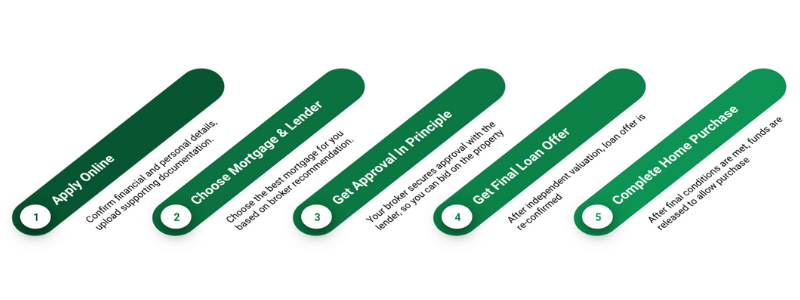
    Once you have chosen your broker you can get the application underway.

    1. Apply Online

    First up you will need to confirm your personal and financial details to get your instant Approval In Principle. You can jump right in below to start the process now.

    Once you have your provisional approval you can upload supporting documents like your bank statements and proof of identity onto the brokers application platform.

    These documents are needed to help prove you can repay the mortgage and also prove you are who you say you are.

    2. Choose Mortgage & Lender

    Your broker then reviews your details plus documents and recommends the best lender and mortgage product. As each lenders approval policy is different they will match you with the best one for you.

    For example, ICS lend more to public servants and is good for short term fixed rates. Avant Money on the other hand don’t do exceptions above the 3.5 salary, but have the best long term fixed rates.

    They will also run you through the other options and why they think they aren’t a fit for you at this point.

    3. Get Full Approval In Principle (AIP)

    Your broker will then use the documents and details you submitted to apply for approval with the rate and lender you picked. It can take 3 days to 3 weeks to get approval depending on the lender you choose (your broker will fill you in on this).

    You can now go bid on a property knowing you have an approval in your back pocket!

    4. Get Final Loan Offer

    Once your offer has been accepted your broker will have it valued by an independent estate agent. This is so the lender can have confidence that the asset that they are securing the lending on (your new house), is worth what you say it is.

    Once the lender has all the details on the property from the broker they issue the final offer, which includes any conditions before you can access or ‘drawdown’ the loan. These are usually things like you must have a life protection policy and home insurance in place, which your broker will help you arrange.

    5. Complete House Purchase

    Ta Da! The moment you have been waiting for, once the conditions are met the loan is released and you get the keys to your new home!

    In a Nutshell – How long does mortgage approval take Ireland 2023

    How you apply for a mortgage makes a big difference to how much you can lend, how long it takes and your approval chances.

    The first thing to do is to work out how much you can borrow and get your provisional AIP, we have a handy mortgage calculator for that here.

    Then you need to make sure all your documentation lines up and if needed clean house on your finances for the 6 months before you apply.

    You should then engage with a broker who can guide you to the best lender and help take the pain out of the paperwork. You can check out moneysherpa’s own in house broker teams the mortgage sherpas here.

    Finally, make sure you know the process and where you are in it, so you can reduce your stress and maximise your chances of getting your dream home.

    We have loads more on help to buy grants, the best rates and mortgage provider reviews here.

    If you want to have a chat and talk it through you can click for a mortgage check up with one of our sherpas here.

    Best Buys

    Avant Money Mortage

    • From 3.61% aprc
    • Years Fixed: 3-30
    • Approval Policy: Tight
    Best Buys

    Haven Mortage

    • From 4.00% aprc
    • Years Fixed: 3
    • Approval Policy: Complex
    Best Buys

    Bank of Ireland

    • From 3.90% aprc
    • Years Fixed: 4
    • Approval Policy: Flexible

    You can get more detail on the documents required from the CCPC [1].

  • Help To Buy Scheme Ireland 2024 – Ultimate Guide to Boosting Your Deposit

    Help To Buy Scheme Ireland 2024 – Ultimate Guide to Boosting Your Deposit

    The Help to Buy Scheme Ireland 2024 allows first time buyers in Ireland to claim 10% of the value of their property, which can be anywhere up to €30,000. 

    In this article, I will be going into detail about how the Help to Buy scheme (HTB scheme) works, what you have to do to qualify, how much can be available to you, how to get your taxes refunded, how to get up to date on your taxes so you can qualify, and finally how to apply.

    1.How does the Help to Buy scheme Ireland 2024 work?

    2. How do I know if I qualify for the Help to Buy scheme Ireland 2024?

    3. How much is available to me from the Help to Buy scheme Ireland 2024?

    4.How will I receive my tax refund from the Help to Buy scheme 2024?

    5.How can I get up-to-date on my taxes for the Help to Buy scheme Ireland 2024?

    6.How can I apply to the Help to Buy scheme Ireland 2024?

    7. A summary of The Help to Buy scheme Ireland 2024. 

    How does the Help to Buy scheme Ireland 2024 work?

    The Help to Buy scheme Ireland 2024 is a Government tax refund scheme.

    The HTB scheme allows first time buyers to claim 10% of their property value to help them pay deposits on newly built homes.

    This HTB incentive offered by the Irish Government lasts until the 31st of December, 2024.

    In order to claim from the Help to Buy scheme Ireland 2024, you must have paid the equivalent amount of 10% of your property value in tax in the previous 4 years before moving into your new home. 

    This refers to Income Tax and DIRT.  You cannot claim from USC or PRSI. 

    Don’t worry too much if you feel that you haven’t paid enough tax to qualify, as in actual fact most people in Ireland likely have paid 10% of their property tax within 4 years and can therefore apply to have their tax refunded for their new home under the Help to Buy scheme. 

    How do I know if I qualify for the Help to Buy scheme Ireland 2024?

    Even if all your taxes are up to date, there are still some more conditions that you need to take into consideration before applying to the HTB scheme.

    In order to qualify for the HTB scheme, you must-

    • Be a first time buyer in Ireland and outside of Ireland
    • Be moving in with an applicant who is also a first time buyer if more than one person will be purchasing the home, ie) if one applicant is not a first time buyer then you cannot qualify for this scheme
    • Be moving into a newly built or self built home
    • Be using the property as your principal private residence for 5 years
    • Be moving into a home that isn’t a conversion or restoration, however a conversion of a non-domestic home into a domestic home can qualify
    • Be moving into a home worth less than €500,000
    • Have a solicitor or contractor registered with the Revenue Commission
    • Have a mortgage with a loan to value of 70%. For example, if you are purchasing a home worth €200,000, your mortgage must be €175,000.

    What rules you out

    • Don’t pay for home in cash. 
    • Don’t be an investor or landlord.
    • Don’t use the property for investment purposes. 

    While it may seem that there are many conditions to the HTB scheme, remember that this incentive is to help first time buyers get on the property ladder. 

    Therefore if you are a first time buyer and have been tax compliant in the 4 years before moving into your new property, you will most likely be able to qualify for the HTB scheme. 

    How much is available to me from the Help to Buy scheme Ireland 2024?

    Under the Help to Buy scheme Ireland 2023, first time buyers can claim, 

    • 10% of the purchase price of their new build, for example a home worth €200,000 can claim €20,000.
    • The amount of Income Tax and DIRT paid in the previous 4 years before moving.

    Or for self-builds, 

    • 10% completion value of their self-build home. 

    In order to claim from the Help to Buy scheme, your home must be valued at €500,000 or less. 

    The most you can claim from the HTB scheme is €30,000, meaning that even if your home is valued at more than €300,000, you still can only receive €30,000 max.

    Value of propertyRates Total claim received
    €300,00010%€30,000
    €400,00010%€30,000- cannot receive more than €30,000.

    How will I receive my tax refund from the Help to Buy scheme 2024?

    So if you qualify for the HTB scheme, your tax refund will be paid to you depending on your property. 

    If you buy a new build after 1 January 2017 (4 years ago), the refund is paid directly to the builder.

    If you self-build the property after 1 January 2017, the refund is paid to a bank account you hold with your loan provider.

    This money can be used to help first-time buyers cover the costs of their deposits.

    How do I get my taxes up to date for the Help to Buy scheme Ireland 2024?

    In order to claim from the Help to Buy scheme, you must be fully tax compliant and all your taxes must be up to date. 

    However if your taxes are not up to date, you must complete a Form 12 if you are a PAYE earner or a Form 11 if you are self-employed.

    You must fill out these tax forms in the 4 year period before you move into your new home and pay any outstanding taxes. 

    How can I apply to the Help to Buy scheme Ireland 2024?

    If you think you qualify for the help to buy scheme Ireland, then you should go to Revenues MyAccount service, where you will be told how much tax refund is available to you as well as apply. 

    In a Nutshell – Help to Buy Scheme Ireland 2024

    In short, the Help to buy scheme 2024 is a great incentive for new first time buyers who are looking to find their way into today’s housing market.

    If you are looking to buy a new home as a first time buyer then the Help to Buy scheme is designed to help you.

    That is why we at moneysherpa believe you should check to see if you’re eligible for this scheme and apply as soon as you can before it ends on the 31st of December, 2024.

    Next Steps – Help to Buy Scheme Ireland 2024

    Wanting to find a mortgage for your new property? Contact one of our mortgage sherpas today free of charge or you get provisional approval in 5 minutes with our instant approval calculator, so you can get going and view some properties!

    If you have any questions about lenders or switching mortgages feel free to contact our QFA mortgage sherpas here at moneysherpa.

  • Stamp Duty Ireland 2023- What is Stamp Duty & Why You Need to Know About It

    Stamp Duty Ireland 2023- What is Stamp Duty & Why You Need to Know About It

    So what is stamp duty Ireland and do you need to pay it? Stamp duty is a tax that is paid when a property has been transferred from one person to another.

    Stamp Duty Ireland.

    When someone transfers their property onto you, you become the property owner and are charged a stamp duty tax.

    Stamp duty is a tax charged on written documents that transfer ownership of land from one person to another. Stamp duty applies to all residential and non-residential properties. 

    The amount of stamp duty you pay depends on how much your property is worth; so the more valuable your property, the more stamp duty you’ll pay.

    In this article. I am going to be breaking down what stamp duty applies to, how it is calculated, the exemptions to stamp duty, will stamp duty be charged on new buildings, the new higher rate introduced in Ireland in 2022, the charges associated with stamp duty, stamp duty in regards to gifts and inheritance and an overall summary of stamp duty. 

    1. What does stamp duty apply to? Stamp Duty Ireland 2023
    2. How do I calculate stamp duty? Stamp Duty Ireland 2023
    3. What exemptions are there to stamp duty? Stamp Duty Ireland 2023
    4. Is stamp duty charged on new builds? Stamp Duty Ireland 2023
    5. What is the new higher stamp rate that has been introduced? Stamp Duty Ireland 2023
    6. What costs are involved with stamp duty? Stamp Duty Ireland 2023
    7. Do I have to pay stamp duty on a property I was gifted/inherited? Stamp Duty Ireland 2023
    8. SummaryStamp Duty Ireland 2023

    1.What does stamp duty Ireland apply to? Stamp Duty Ireland 2023

    Stamp duty will be applied every time you become a property owner. It applies to all properties, whether they be brand new or second hand. However new builds will not be subject to VAT, I go into this in more detail here.

    Stamp duty applies to all residential properties such as houses, apartments or sites that will be used for buildings .

    It also applies to non-residential property, such as land or housing sites without residential buildings. 

    2. How do I calculate stamp duty? Stamp Duty Ireland 2023

    In Ireland ,stamp duty is levied at 1% up to €1 million. Any property over €1 million is levied at 2%. 

    Here’s an example excluding VAT-

    Lets say you have a property worth €2 million. 

    First €1 million1%€10,000
    Remaining €1 million2%€20,000
    Total stamp duty €30,000

    For non-residential properties, stamp duty is charged at 6%.

    So what is the difference between residential and non-residential properties?

    To put it simply, a residential property is one suitable for dwelling, such as a home or an apartment. Stamp duty is charged at 1-2% for residential properties. 

    Don’t worry too much about calculating the stamp duty of your own property, as your solicitor will do this for you. 

    However, it’s still good to know roughly how much stamp duty you will have to pay before purchasing a property.

    3.What exemptions are there to stamp duty Ireland? Stamp Duty Ireland 2023

    Of course there are a few exceptions where you don’t have to pay stamp duty. 

    There is no stamp duty charged on the transfer of property between-

    • Spouses and civil partners.
    • Former spouses (divorced).
    • One cohabitant to their other cohabitant. 

    If you are buying a home under the local authority tenant purchase scheme you will only be charged €100 worth of stamp duty. 

    4.Is stamp duty Ireland charged on new builds? Stamp Duty Ireland 2023

    For new builds, stamp duty is still paid, however it is calculated differently. For new builds you will be charged stamp duty on the value of the home and VAT will not be included. 

    Here’s an example-

    The standard rate of VAT is 23%. Let’s say we have a property worth €450,000. 23% of €450,000 is €103,500. This means that before VAT the value of the home was €346,500. Hence our 1% stamp duty tax will be charged on the €346,500, not the €450,000.

    This only applies to new builds, not 2nd hand properties. 

    5.What is the higher stamp duty Ireland rate that has been introduced? Stamp Duty Ireland 2023

    In July 2021, an act was introduced that charges 10% stamp duty on property owners who have bought 10 or more properties within one year after the 20th of May 2021. 

    This act was introduced to stop the bulk buying of homes in Ireland and to discourage investment funds from buying up housing estates, so first time buyers are given a chance to purchase a home. 

    This higher rate does NOT apply to apartments. It also does not apply to homes bought for social housing purposes. 

    6.What are the costs involved with stamp duty Ireland? Stamp Duty Ireland 2023

    Your solicitor will calculate how much stamp duty is due for you before the sale is closed. This stamp duty is paid to the Revenue Commission and a stamp is placed on the deeds of the property. 

    Whilst having a solicitor to do all the hard paper work for you is a huge help, it does come at a price.

    The price of a solicitor to guide you through this process will vary. Some solicitors will charge a flat fee, whilst some will ask for a % value of the property, such as 1 or 2%. 

    You should be prepared to spend between €1000-€3000 in legal fees along with VAT. 

    This is why it is important to research a good solicitor that will get the job done at a reasonable price before thinking about transferring properties. Check out more on solicitor fees here.

    7. Do I have to pay stamp duty Ireland on a property I inherited or was gifted? Stamp Duty Ireland 2023

    According to the Revenue Commission [1] , if you are given a property as a gift that is situated in Ireland and the property has been transferred to you then yes, you will still have to pay stamp duty

    However you will NOT have to pay stamp duty on a property that you have inherited, such as a property left to you in a will.

    In a Nutshell – Stamp duty Ireland 2023

    So in summary, stamp duty is a major factor to take into consideration when you are planning on buying a property.

    It is important to remember that between buying the property, solicitor fees as well as stamp duty, buying property requires a lot of money. Hence you should thoroughly research how much a property will cost you and put a lot of thought in before you start enquiring.

    From this article, you should hopefully have a better understanding of how stamp duty is calculated and what factors you should keep in mind before looking about buying a new property.  

    What’s Next? Stamp Duty Ireland 2023

    If you have any more questions about stamp duty or buying a new property feel free to book an appointment with our financial advisors here at moneysherpa free of charge here.

    If you want to see what you could save by calculating your repayments and see all mortgage provider rates you can click here.

    If you want to know more about other mortgage providers you can click here.

    If you want to know more about longer term fixed rates, you can check out our deep dive best fixed rate mortgage piece here or how fixed versus variable compares here.

    If you want to know more about switching you can click here. Or you can check out our handy switching mortgage guide here and our remortgaging guide here. If you still have questions check out our switching Q&A here.

    If you are thinking of freeing up some extra cash from your home, take a look at our mortgage top up tips here or if you are over 55 our equity release rundown here.

    If you want to get your savings started right now, set up a free no obligation video call with a mortgage sherpa here, covering not only the best rate, but also helping choose the lender most likely to approve you and helping take the pain out of the paperwork.

  • What is a Green Mortgage Ireland and why should I consider applying for one?

    What is a Green Mortgage Ireland and why should I consider applying for one?

    Green Mortgage Ireland

    Green Mortgage Ireland. As the world is becoming more environmentally conscious, so are mortgage lenders. Green mortgages are slowly becoming more and more popular as they are a great incentive to make our homes more energy efficient, which will help us save money as well as our planet.

    Here at moneysherpa, we have looked at the different Green Mortgages Ireland, as well as the requirements necessary for a Green Mortgage in Ireland. We have also put together some useful ways you can make home more energy efficient to impress Green Mortgage providers.

    In this article, I will be discussing why you should consider applying for a Green Mortgage, what you have to do in order to apply for one, what you can do to make your home more eligible for a Green Mortgage and overall, are Green Mortgages worth the time and effort required?

    1. Why should I consider applying for a Green Mortgage Ireland ?

    2. What do I need to do to apply for a Green Mortgage Ireland ?

    3. How can I make my home more energy efficient? – Green Mortgage Ireland

    4. Final verdict – Green Mortgage Ireland.

    1. Why should I consider applying for a Green Mortgage Ireland?

    green mortgage ireland

    As I have mentioned previously, a Green Mortgage acts as an incentive to encourage people to make their homes more environmentally friendly. Lenders will offer certain rewards such as lower interest rates to homeowners whose homes are considered energy efficient. 

    Many lenders such as Bank of Ireland and Ulster Bank all offer lower interest rates for homeowners applying for a Green Mortgage. 

    Haven Mortgages have offered a 2.15% fixed rate on homes that they believe to be energy efficient, as well as offering €2000 to cover legal costs.

    Haven have stated that homeowners with an existing mortgage of €300,000 on a €350,000 home could save up to €3,204 per year by availing of this 2.15% fixed rate, instead of the usual variable rate of 3.7%.  

    2. What do I need to do to apply for a Green Mortgage Ireland?

    When it comes to Green Mortgages, your bank will ask you for a document known as a Building Energy Rating (BER), which essentially is a calculation of how energy efficient your home is. BER certificates are valid for up to 10 years. 

    The BER measures how energy efficient your home is on a scale of A to G, with A being the most energy efficient your home can be. So what factors will affect your BER rating? Well, there are a variety of aspects affecting your BER, such as adequate insulation, a working boiler, etc..

    The vast majority of banks will require a BER rating of at least B3 or B2 in order to qualify and apply for a Green Mortgage. 

    Lenders such as AIB, Ulster Bank, Bank of Ireland and Haven Mortgages all provide Green Mortgages in Ireland in 2021.

    In order to avail of a Green Mortgage, you will have to receive your mortgage from one of these 4 lenders. However, if you are not with any of these specific lenders, you can contact a broker and switch to one of these mortgage providers to avail of a Green Mortgage. 

    3. How can I make my home more energy efficient? Green Mortgage Ireland.

    green mortgage ireland

    There are many simple and straightforward things that we can do to make our homes more energy efficient, which will increase our BER rating as well as save us money in the long run.

    We can take certain easy and affordable measures such as keeping the immersion at 65 degrees or using efficient electrical lighting to make our homes B3 worthy. However, if you are willing to invest in making your home even more energy efficient, you could replace your unproductive boiler with a water pump which renews energy, or look about taking further steps to properly insulate your home. 

    All these measures, big or small, will help to maximise the energy efficiency of your home and overall will help make your application for a Green Mortgage more likely to succeed, and may even save you money by reducing your energy bills and making your home cheaper to heat!

    Final Verdict: Should I apply for a Green Mortgage Ireland?

    Green Mortgage Ireland

    Overall, Green Mortgages are a great way to save money on a more energy efficient home. Making your home energy efficient won’t only allow you to benefit from a lower fixed interest rate, but will also help you save money in areas such as heating and electricity.

    However, making your home more energy efficient does come at a price, so you should only avail of a Green Mortgage if you are willing to put the time, effort and money required into making your home more sustainable.

    So, what’s next? Green Mortgage Ireland.

    1. Check with your mortgage provider to see if they offer Green Mortgages and if so, what incentives do they offer for those who avail of this mortgage?

    2. Research and find out if your home is eligible for a Green Mortgage and check your BER rating by contacting a BER assessor. 

    3. Try and find different affordable ways to make your home more energy efficient and B3 worthy.

    If you are interested in switching your mortgage to a green mortgage, you can find out more about mortgage switching here.

    If you want to calculate how much you would save by switching to a green mortgage, check out our mortgage calculator here.

    If you wish to switch mortgage providers to a lender offering Green Mortgages, feel free to contact one of our mortgage sherpas for a free consultation. 

  • Remortgage Ireland 2024, Ultimate Guide. How to Save Over €20,000

    Remortgage Ireland 2024, Ultimate Guide. How to Save Over €20,000

    Remortgage Ireland 2022

    Remortgage Ireland 2024. When I headed up mortgage products at PTSB, the low numbers of people remortgaging in Ireland was a shock. Despite huge savings we still have one of the lowest rates of remortgaging on the planet.

    Remortgaging is simply taking out a new mortgage to pay down your old mortgage, either to get a lower rate (known as switching) or to release cash tied up in your home (know as top up or equity release).

    Anybody who took out a mortgage after 2008 and is no longer on an introductory rate is likely to save around €25,000 by remortgaging. Over half of all mortgage holders, that’s over 450,000 households, will save at least €5K.

    Why is the remortgaging rate so low? Well, most people don’t know how much they can save or how to remortgage. By the end of this article you will be one of thew few lucky ones able to take advantage of the record low interest rates for those remortgaging right now!

    Would I save by remortgaging? – Remortgage Ireland 2024

    How much would I save by remortgaging? – Remortgage Ireland 2024

    How much hassle and cost is remortgaging? – Remortgage Ireland 2024

    How do I remortgage? – Remortgage Ireland 2024

    In a nutshell – Remortgage Ireland 2024

    What next? – Remortgage Ireland 2024

    Would I save by remortgaging? Remortgage Ireland 2024

    If you are one of the 66%+ people who took out a mortgage after 2008 you should definitely look into remortgaging. This is because you’re probably on what lenders call a standard variable rate.

    Irish Standard Variable Rates are some of the highest in Europe, at 4.2% [1]. Remortgaging to a new business rate will reduce your interest rate and remove the risk of further increases. 

    If you are on a tracker mortgage, remortgaging might also make sense as ECB rates are at record highs and it may help you cap your repayments.

    Even if you are on a fixed rate, if it’s less than 3 years you should probably consider remortgaging to get on a longer fixed term deal of 5 or more years to protect against upcoming variable and fixed rate increases.

    How much would I save by remortgaging? Remortgage Ireland 2024

    If you are in the majority of Irish mortgage holders (66%+) who would save big by remortgaging,  working out exactly how much you would save isn’t complicated. 

    Our handy mortgage repayment calculator automatically calculates the rates available at your LTV and estimates out how much you would save if you remortgaged to the best rate in the market.

    If you want to see all the providers mortgage rates and your repayments for your LTV you can click the more information button.

    The loan and term outstanding is easy to get as it is sent to you each year by your lender and doesn’t change that much each year. For people remortgaging last year the loan was €170,000 and the term 15 years on average. [2]

    The more your home value rises the lower the rate you can get when you remortgage. This is what lenders call the Loan to Value ratio or LTV. If you’re not sure about your home value it’s easy to estimate. 

    If you bought before the crash in 2008 your house is probably now worth about what you originally paid for it as the market has pretty much bounced back since then. 

    If you bought after 2008 it should be worth roughly what you bought at, plus give or take an additional 4% for every year since you bought. So if you bought ten years ago you can add on 40%, nice!

    How much hassle and cost is it remortgaging? Remortgage Ireland 2024

    Fortunately to remortgage in Ireland 2024 isn’t like applying for a mortgage the first time around. You can now do it totally online and for free. 

    There are still some upfront costs you have to watch out for, you still need to get a solicitor to handle your house deeds and help you with the new mortgage agreement. You will also need to get your house valued by an estate agent to help set your mortgage rate.

    The higher the value of the house the lower the loan to value rate, which means less risk for the bank, which means a lower rate for you.

    All in switching costs usually come in at around €1,200 including the VAT, way lower than the potential savings.

    Even better lenders, who are keen for new business, often pay for your solicitors fees and to get your home valued and for you to use an online switching platform like moneysherpa’s.  AIB and Haven offer over €1,500 towards the cost of switching. BoI, PTSB and EBS all offer 2%+ cash back which often works out at even more.

    Plus, they will handle all the paperwork for you.    

    How do I remortgage Ireland 2024?

    If you use a service like moneysherpa’s it is pretty straight forward. The main thing you need to worry about is what to do with the money saved. Seriously, do you?

    1. Pocket the savings

    If you bought after 2008, have around €170,000 and 15 years left on your mortgage you should be looking to save over €180 a month in saved interest payments.

    That would be €32,400 saved over the 15 years, without including cash back payments if you keep switching. This can make a really positive difference to the household budget and give you some welcome financial wriggle room.

    2. Pay off the mortgage earlier

    This is personal favourite as you effectively double down with your savings.

    If you use the €180 a month you save to pay off your mortgage quicker, you can reduce your term by over 10% without paying anymore than you do today. Saving you another €4,307.

    That’s €32,400 + €4,307 = €36,707 saved.

    3. Release more cash

    If the lower monthly repayments from remortgaging mean you can borrow more, known as topping up your mortgage you could free up the cash tied up in your home. Because it’s secured on your home, a mortgage is one of the cheapest ways of securing credit. This can be a great way to fund big once off investments, but be careful if you might struggle to repay the higher amount. 

    In a nutshell – Remortgage Ireland 2024

    Remortgaging is a great way to save. 1 in 5 people will save over €25,000 and over half will save over €5,000 by remortgaging in Ireland 2021.

    Rates are better than ever and many mortgage brokers will handle the paperwork for you for free as they are paid by the lenders. Talking to a broker can help you work out the best option for your own circumstances, whether you are looking to simply save, fix your rate or free up cash. 

    What next? – Remortgage Ireland 2024

    To check out how much you would save or what rates are the best for you, use our handy remortgage calculator here.

    You can find out more about switching costs here or switching mortgages here.

    You can read more about mortgages or talk to one of our moneysherpa mortgage team here.

    What does remortgage mean?

    Remortgaging is simply taking out a new mortgage on your existing property. When this is done with a lender who isn’t your current lender this is also known as switching. Typically people remortgage to get a lower rate, a shorter term or to borrow additional funds, also known as a mortgage top up.

    What the difference between a remortgage, a switch and a mortgage top up?

    A remortgage can either be with your current lender or a new lender, while a switch is a remortgage with a new lender. A top up is a remortgage that takes out more funds usually for home improvements.

    Why remortgage?

    There are two main reasons why people remortgage or switch mortgage.
    1) New customer rates in Ireland are almost half existing customer rates, so remortgaging can save mortgage holders significant amounts in interest payments
    2) To release equity tied up in your home. To allow investment or major purchases at mortgage interest rates which are lower than other types of loans.

    How to remortgage your house?

    The first step is usually to talk to a mortgage broker with access to all the lenders. They will look at who is most likely to lend to you and at what rate. Depending on what you want to do, different lenders will be suitable for different things.

    How does a remortgage work?

    If your switching lenders the new lender will pay down your current mortgage with the current loan. If you are still in your fixed period there may be what’s known as a breakage or early redemption fee, check with your current lender if there is, usually there is no or a very low fee and it still makes sense to switch. Once your new loan is in place with the new lender you will move on to the new terms you have agreed.

    What is a remortgage?

    A remortgage is a new mortgage on a property already with a mortgage. Usually that new mortgage is used to pay off the previous mortgage. Often the new mortgage is at a lower rate reducing the repayments and saving money for the mortgage holder. In Ireland this is often known as switching mortgage.

    How early can I remortgage?

    If you are on a variable or tracker rate you can remortgage straight away, if you are on a fixed rate you may be charged a ‘breakage fee’. However, these fees are regulated by EU law and can be zero or quite low, so you may be able to still remortgage within your fixed term. Check with your current lender what your break fee would be and then talk to a broker.

    How do you remortgage a house?

    To remortgage you take out a new mortgage with a new lender and use that to pay off your current lender. Usually to improve the rate or increase the mortgage amount. This known as mortgage switching in Ireland and remortgaging in the UK, but it is the same process. 
  • Mortgage switching costs, 4 great legal fees and cash back tips

    Mortgage switching costs, 4 great legal fees and cash back tips

    mortgage switching costs

    Don’t let mortgage switching costs put you off switching. Switching mortgage improves your financial shape more than anything else bar winning the Lotto. In fact, if you bought after 2008 you will probably save over €20,000 by switching to lower rates.

    That said, there are some upfront costs you need to know factor in, read on to find out what they are, how you can cover them with cash back and why switching still makes loads of sense.

    1. What are mortgage switching costs and switching mortgage legal fees?
    2. How much are mortgage switching costs, switching mortgage legal fees and how much is it to switch?
    3. Which banks cover mortgage switching costs, switching mortgage legal fees and what options are there?
    4. Does it still make sense to switch after mortgage switching costs and switching mortgage legal fees?

    What are mortgages switching costs and switching mortgage legal fees?

    The good news is that switching your mortgage is much less stressful, easier and nowhere near as costly than buying a new home. That said there are still some solicitor and estate agent upfront mortgage switching costs.

    Don’t panic though these costs are usually much less than the savings from switching and with some lenders switching mortgage legal fees and estate agent costs are fully covered with upfront payments.

    There are no land registry or search fees involved with switching, but you will need a solicitor to do a bit of paperwork for you. Switching mortgage legal fees cover the solicitor costs to:

    1. Request your house deeds on behalf of the new bank from your current bank
    2. Review and advise you on the terms of the loan the new bank is offering you
    3. Witness and process the loan agreement for the new bank

    These steps give everyone involved in the switch peace of mind, the bank knows your ownership of the property is kosher and you understand the deal being offered to you by the bank.

    As well as switching mortgage legal fees, the other mortgage switching cost is a valuation fee. An estate agent selected by the bank will also value your home, this allows the lender to make sure you are on the right mortgage rate.

    How much are mortgage switching costs, switching mortgage legal fees and how much is it to switch?

    So how much are the mortgage switching costs all in?

    Switching mortgage legal fees range from about €1,500 to €2,000 including VAT at 23%. Typically solicitors in Dublin will be at the higher end of the range.

    moneysherpa have agreed an all in switching price of €1,500 including VAT for customers switching with one of their mortgage sherpas [1]. As well as the VAT this all in fee includes

    • Legal Fees
    • Bank Fees
    • Search/Land Fees
    • Declaration Fees

    The other mortgage switching cost is the valuation fee which is much less at around €150.

    So if you shop around, your all in costs should come in well below the €2,000 mark inc VAT.

    Which banks cover mortgage switching costs, switching mortgage legal fees and what options are there?

    Many of the lenders don’t want these costs to put off potential switchers so pay an upfront cashback incentive. These incentives usually cover mortgage switching costs including mortgage legal fees with cash to spare.

    Haven offer €1,500, €2,000 depending on the value of the mortgage to cover mortgage switching costs.

    PTSB, EBS and BoI offer 2% and 3% of the mortgage loan as cashback. So on a typical loan size of €200,000 that’s €4,000 to €6,000 into your hand, covering your legal fee costs and then some.

    These deals are really useful if you can’t afford to cover the mortgage switching costs, but would save by switching. They also are a great option if you are looking to switch multiple times, as under EU law lenders can’t stop you taking more than one cash back.

    That said, if you can afford to pay the mortgage switching costs upfront and are looking to get on the best long term deal, you should us the APRC rate rather than the cash back deal to choose your mortgage provider.

    In our latest mortgage market review the  Avant Money 7 year fixed rate product came out on top, despite having no cash back at all. The 7 year fixed rate is €6,775 cheaper than the best cash back product available on a typical loan size of €200,000.

    That’s why you are often better to ignore cash back if you can and cover the mortgage switching costs yourself if you can afford it.

    Does it still make sense to switch after mortgage switching costs and switching mortgage legal fees?

    If you bought your house after 2008 you are probably on rates of 4% plus.

    The rates for switchers right now are at an all time low at around 2%.

    This big difference in rate means that you would save over €25,000 by switching on a typical mortgage size of €200,000.

    This means that even after you factored in the mortgage switching costs including the legal fees, you would save over €23,000 over the lifetime of the mortgage.

    The really great news is that comparing rates and switching is easier than ever thanks to services like moneysherpa.

    moneysherpa have agreed an all in switching price of €1,350 including VAT for customers switching with Jacob Law.

    Our recommended solicitor panel cover the majority of the country and are experts in property conveyancing, they are 100% online and are the fastest in the market. Just click here to book an appointment.

    You can calculate your savings and book an appointment online instantly here.

    If you want to find out more about switching, you can read our ultimate guide to switching here or our review of the best mortgage deals here.