moneysherpa

Category: Mortgage

Want to know the best mortgage for switching, buying a home or equity release? You’ve come to the right place!

Check out our guides on the best mortgage brokers, best mortgage providers and the best mortgage rates.

  • 3 Real Life Switcher Examples Saving Over €10,000 Each

    3 Real Life Switcher Examples Saving Over €10,000 Each

    You might have heard that the average mortgage switcher in Ireland saves over €20,000, but that sounds too good to be true, right?

    I mean if that was true everybody would be doing it surely and you’d be straight on google to get switched yourself, so there must be a catch?

    Spoiler alert: There’s no catch.

    That’s why record numbers are switching right now with more joining in everyday.

    So we thought in this article we would share some real life examples of 3 of our recent mortgage switchers. That way you can see for yourself what people are actually saving and what’s actually involved in being a switcher.

    Read on to see what switchers just like you have saved in the last few months and how much you could save by switching.

    If you want to see how different providers compare on your mortgage right now you can click here.

    1. Couple Switching from PTSB to ICS – Example
    2. Couple Switching from AIB to Avant Money – Example
    3. Single Switcher from PTSB to Avant Money – Example
    4. What you should do next – Example

    Noel & Naeiri, Switch from PTSB to ICS – Example

    Noel & Naeiri Gavin have a home in Navan and switched their mortgage using online broker moneysherpa.test.inview.ie.  Noel works in engineering and Naeiri is a stay at home mum.

    Due to a combination of the strong property market in Navan and a number of home improvements they made to the house, the value of their home increased to over €500,000.

    This reduced their loan to value to less than 60%, which is the size of the mortgage compared to the value of the property, allowing them to access better mortgage rates. 

    They originally took out their mortgage with Permanent TSB which has one of the highest rates in the market. 

    The fixed rate they were on was expiring in a few months so they contacted Moneysherpa for guidance on their next step. 

    If they did not take action the mortgage would revert to the general variable rate from PTSB, which was 3.7%.

    [mortgage_rates_var_followon_ltv_compare]

    moneysherpa advised them that they could save even more by switching provider to ICS mortgages, who’s fixed rate packages at 2.29% APRC recognise and reward the reduced risk from a low Loan to Value ratio when your property is worth more than your loan value. 

    Noel & Naeiri were able to reduce their mortgage payments and take 4 years off their mortgage saving over €38,000 in the process by completing the switch.

    Murray and Jennifer, switched from AIB to Avant Money – Example

    Murray and Jennifer living in Drogheda switched their mortgage from AIB to Avant Money with moneysherpa. They saved over €10,000 with Avant Money’s 7 year Fixed rate and were able to use the savings they made to pay off their mortgage earlier.

    Avant Money have some of the lowest rates on the market, their 7 year fixed is one of our favourites starting from 1.95% and locking in your savings for 7 years.

    Short/Medium60% LTV70% LTV80% LTV90% LTV
    Fixed TermRateAPRCRateAPRCRateAPRCRateAPRC
    3 Years1.95%2.03%2.05%2.06%2.15%2.23%2.2%2.25%
    4 Years1.95%2.02%2.05%2.23%2.15%2.23%2.2%2.23%
    5 Years1.95%2.02%2.05%2.06%2.15%2.22%2.2%2.25%
    7 Years1.95%2.01%2.05%2.07%2.15%2.21%2.25%2.28%
    10 Years2.10%2.12%2.20%2.20%2.30%2.32%2.40%2.40%
    AVANT MONEY RATES (APRC calculated on €100K loan, 30 years, valuation of €185, security release €40)

    ICS Mortgages pip Avant at the post for the shorter fixed term products due to their more flexible credit policy. However if you have a sparkling credit history the Avant Money 3 year and 4 year fixed at 2.39% & 2.43% respectively are so close it makes no difference.

    Sandra, Switching from PTSB to Avant Money – Example

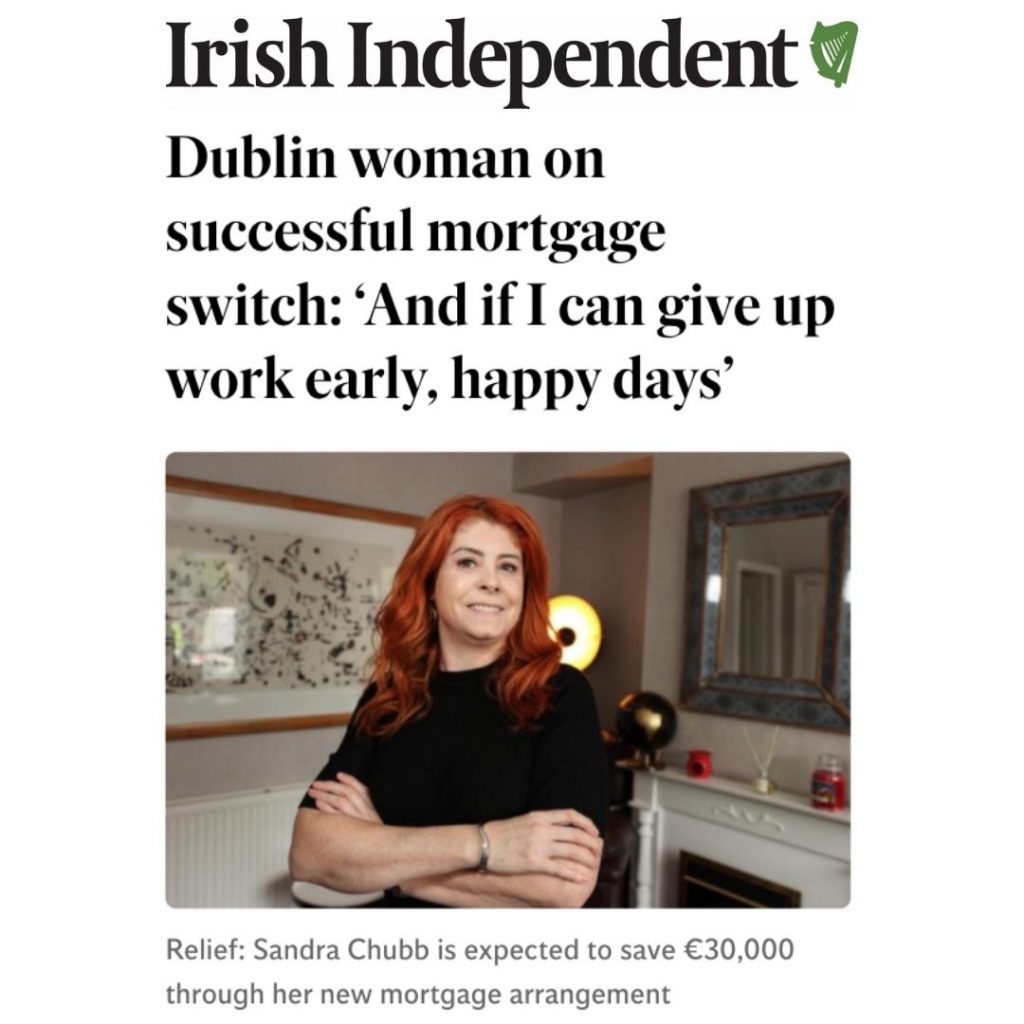
    Sandra Chubb from Ballyfermot switched her €110,000 mortgage from PTSB to Avant Money in January.

    She saved over €10,000 by lowering her interest rate from 3.4% to 2.01% APRC with Avant Money’s 7 year fixed product. 


    By reducing her interest rate by over 40% she was able to afford to reduce her mortgage term from 21 years to just 12 saving thousands in interest payments. 


    Sandra switched with online broker moneysherpa.test.inview.ie 

    “They were really friendly, gave me independent advice and helped me pull together the paperwork. Most people don’t realise they are in a position to save so much by switching” 

    That’s why we would recommend using a broker to help you switch to a fixed rate product with a low on-going rate from either Avant Money or ICS.

    The lenders with the lowest rates can usually only be accessed by brokers, many brokers are free to use and they can take the pain out of the paperwork.

    What’s Next?

    It makes more sense than ever to compare mortgage rates with massive savings available. There probably isn’t another financial decision that has as big an impact on your wallet.

    A big thanks to Noel, Naeiri, Murray, Jennifer and Sandra for letting us share their stories.

    The non bank lenders ICS, Avant Money and Finance Ireland have really leapt ahead of the pack this year with a 0.5% discount across all mortgage types. This has left the banks, who are weighed down with legacy costs, trailing in their dust.

    These non bank lenders are only available via a mortgage broker or via one of our own mortgage sherpas, click for a mortgage check up with one of our sherpas here.

    Best Buys

    Avant Money Mortage

    • From 3.61% aprc
    • Years Fixed: 3-30
    • Approval Policy: Tight
    Best Buys

    Haven Mortage

    • From 4.00% aprc
    • Years Fixed: 3
    • Approval Policy: Complex
    Best Buys

    Bank of Ireland

    • From 3.90% aprc
    • Years Fixed: 4
    • Approval Policy: Flexible

    If you want to see what you could save by calculating your repayments you can click here.

    If you want to know more about switching you can click here.

    If you want to get your savings started right now, set up a free no obligation video call with a mortgage sherpa here.

    Annual Percentage Rate Charge (APRC) calculated on a €100,000 loan over 20 years. APRC represents the average rate across the lifetime of a typical mortgage and is recommended as the best rate to use for comparisons by the CCPC. [1]

  • New €1,500 offer for Ulster KBC Switching to Avant Money

    New €1,500 offer for Ulster KBC Switching to Avant Money

    ulster kbc switching

    Ulster KBC switching. Avant Money are offering €1,500 upfront for anyone switching their mortgage from Ulster Bank or KBC. The offer is available until the 31st of March and targets customers thinking of switching from Ulster & KBC as both exit the Irish market this year.

    Ulster Bank have sold their existing mortgages to PTSB and KBC to Bank of Ireland. This means if you have a mortgage with either you and your mortgage will transfer.

    Higher Rates on the Way for Ulster and KBC customers? – Ulster KBC Switching

    PTSB and Bank of Ireland have the highest mortgage rates in the market so many Ulster and KBC customers are considering switching to a different lender. If you are in your fixed rate period then PTSB and Bank of Ireland will have to honour those rates, but after that they could choose to hike rates increasing your monthly repayments.

    You can see how much higher PTSB and Bank of Ireland rates are in the table below.

    [mortgage_rates_var_followon_ltv_compare]

    Free Switching Costs – Ulster KBC Switching

    Switching costs are usually around €1,500 for solicitor and valuation fees combined, so this offer will make switching from Ulster and KBC effectively free.

    At moneysherpa for example we offer an all in legal package including all outlays for €1,200 including VAT, while estate agent valuation fees are typically around €200. So €1,400 all in.

    Example Switching Saving – Ulster KBC Switching

    So a typical KBC mortgage customer on their 4.25% variable rate, with €172,000 remaining over 16 years would save €187 a month and €35,983 over their remaining term. The repayment calculation is based on switching to Avant Money’s 5 Year fixed rate and using the switching offer to cover their upfront costs.

    [mortgage_rates_3yr_ltv_compare]

    If you are with KBC or Ulster and not on a tracker, the new Avant Money €1,500 switching offer means you will probably save over €20,000 without having to pay any upfront fees.

    Next Steps – Ulster KBC Switching

    Ulster and KBC have been bought out by the banks with the highest mortgage rates in the State, PTSB and Bank of Ireland, so now is a good time to switch to avoid higher rates down the line.

    You can book a free appointment to check out if you would save here.

  • How Long Does Mortgage Approval Take & How Do I Get Pre-Approval Now – Ireland 2023

    How Long Does Mortgage Approval Take & How Do I Get Pre-Approval Now – Ireland 2023

    How long does mortgage approval take ireland

    Buying a home is probably the biggest financial decision you will ever make and one of life’s most stressful times. So you are probably super keen to know how long does mortgage approval take and can you get pre-approval or approval in principle like yesterday.

    Knowing how mortgage approval and pre-approval works in Ireland can help you secure your dream home and reduce your stress levels.

    That’s because how you apply makes a big difference to how much you can borrow and how long the whole process will take.

    With our Ultimate Guide to how to mortgage approval Ireland 2023, you could borrow up to 4.5 times your joint income and get the whole thing done and dusted in less than 3 months.

    Here’s our top 3 how to get mortgage approval Ireland 2023 tips

    • Maximise your savings in the 6 months before you apply to maximise what you can borrow
    • Understand how best to navigate the mortgage approval process to minimise delay
    • Use a broker with a wide selection of lenders to maximise your mortgage approval odds

    Use our tool to get Pre-Approved now below.

    If you want to find out more before diving in read on to see understand how you can get mortgage approval and maximise how much you could borrow while minimising the hassle factor.

    1. Work Out How Much You Can Borrow – How long does mortgage approval take Ireland 2023
    2. Maximise My Approval Chances – How long does mortgage approval take Ireland 2023
    3. Get Some Help – How long does mortgage approval take Ireland 2023
    4. What Happens Next – How long does mortgage approval take Ireland 2023

    Work Out How Much You Can Borrow – How long does mortgage approval take Ireland 2023

    The first step is to work out how much mortgage you can get, you might not need to borrow up to your limit, but it will help you to understand your maximum budget in case you find yourself in a bidding war for your new gaff.

    To help avoid a credit bubble like the one that went pop back in 2008 the Central Bank sets some absolute maximum limits that no lender can go beyond.

    If you are buying your home to live in, the limit is the lower of either

    • Income – 4.5 times your joint gross income per year
    • Deposit – 10 times your deposit

    Wait a minute before you rush off and bid on that dream home, the Central Bank only allows 20% of all borrowers in any year borrow up to these limits.

    The lenders are therefore very picky about who gets these ‘exceptions’ only putting forward people with squeaky clean credit histories and very high levels of disposable income.

    If you fall outside the top 20% of applications then the limits are

    • Income – 3.5 times your joint gross income per year
    • Deposit – 10 times your deposit for first time buyers and 5 time for others

    As part of the application process the lenders will also run the rule over your ability to repay the loan. Based on this they may lend you less than the limits above or indeed nothing at all.

    For most people the 3.5 times salary limit is the one that applies and gives the best idea of your budget. However if you need an exception to make up the numbers or want to maximise your odds of approval you can use our instant Approval In Principle (AIP) tool below.

    Our tool runs the numbers based on your income and expenditure and instantly spits out your odds of mortgage approval across the lenders. Even better we will then automatically email you with a provisional Approval In Principle that you can use to view property and start your house hunting!

    Maximise My Approval Chances – How long does mortgage approval take Ireland 2023

    Even if you have enough disposable income for mortgage approval on paper based on our provisional AIP calculator we then have to back this up with evidence.

    Lenders try to work out, based on information on your application for what’s know as a full Approval In Principle, the likelihood of you not paying back the mortgage in full. If a loan goes south that’s a big hole in their profits, so the more risk they think you are the less they will lend.

    This means you can maximise the mortgage you can get by knowing what they are looking for and getting your finances in shape in advance of mortgage approval.

    This is why the question how long does mortgage approval take can have a different answer depending on your circumstances. A switcher can be done in 6 weeks as they have solid proof they can make the repayments, while someone who doesn’t have evidence of spare cash left over might have to wait up to 6 months before even applying.

    The 6 months before the application is critical as lenders will look at your bank statements in this period to assess your ability to repay the loan as part of the application.

    So what are the key things you can do to maximise your approval chances?

    1. Maximise your Income – Many lenders include 50% of overtime, bonuses and commission, so maximising these can be a big help.
    2. Clear your outstanding loans – These eat into your ability to repay and are usually higher interest than your mortgage will be.
    3. Secure your employment – Make sure you have finished any probation period or have a long term contract.
    4. Don’t splurge – Minimise your outgoings, so you show consistent evidence of saving some money at the end of every month.
    5. Delete your Paddy Power app – Any major spend on online gambling is a big no no and don’t try to be smart by moving it to your Revolut account the lenders are wise to that and will ask for statements.

    Keep your nose clean for 6 months and you will demonstrate to the lenders you can be trusted and will maximise your mortgage potential.

    Get Some Help – How long does mortgage approval take Ireland 2023

    So you have 6 months of sparkling clean bank statements and you are sick of living on your mates couch, what do you do next?

    You have two choices to kick start the application process.

    1. Apply to one of the lenders directly
    2. Apply to a lender through a broker

    Which lender you apply to can make a huge difference to your approval chances and what you will pay over the course of the mortgage. That’s why we recommend using a broker for your application.

    A broker can look at your situation and match you with the best lender to maximise your approval chances and minimise your repayments. Brokers are often free to use and are impartial as they get paid the same commission 1% of the mortgage value by all the lenders.

    Not all brokers are created equal though. Check out if your broker has:

    • Access to the best lenders for rate Avant Money, ICS, Haven and Finance Ireland
    • No fees or low fees for your type of application
    • An online application process to make the paperwork easier
    • A best rate guarantee

    What Happens Next – How long does mortgage approval take Ireland 2023

    Once you have chosen your broker you can get the application underway.

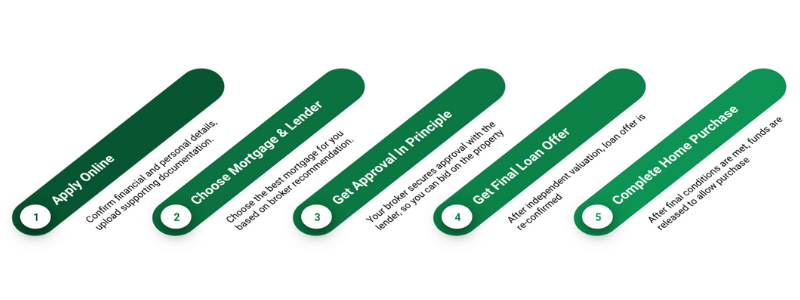
    1. Apply Online

    First up you will need to confirm your personal and financial details to get your instant Approval In Principle. You can jump right in below to start the process now.

    Once you have your provisional approval you can upload supporting documents like your bank statements and proof of identity onto the brokers application platform.

    These documents are needed to help prove you can repay the mortgage and also prove you are who you say you are.

    2. Choose Mortgage & Lender

    Your broker then reviews your details plus documents and recommends the best lender and mortgage product. As each lenders approval policy is different they will match you with the best one for you.

    For example, ICS lend more to public servants and is good for short term fixed rates. Avant Money on the other hand don’t do exceptions above the 3.5 salary, but have the best long term fixed rates.

    They will also run you through the other options and why they think they aren’t a fit for you at this point.

    3. Get Full Approval In Principle (AIP)

    Your broker will then use the documents and details you submitted to apply for approval with the rate and lender you picked. It can take 3 days to 3 weeks to get approval depending on the lender you choose (your broker will fill you in on this).

    You can now go bid on a property knowing you have an approval in your back pocket!

    4. Get Final Loan Offer

    Once your offer has been accepted your broker will have it valued by an independent estate agent. This is so the lender can have confidence that the asset that they are securing the lending on (your new house), is worth what you say it is.

    Once the lender has all the details on the property from the broker they issue the final offer, which includes any conditions before you can access or ‘drawdown’ the loan. These are usually things like you must have a life protection policy and home insurance in place, which your broker will help you arrange.

    5. Complete House Purchase

    Ta Da! The moment you have been waiting for, once the conditions are met the loan is released and you get the keys to your new home!

    In a Nutshell – How long does mortgage approval take Ireland 2023

    How you apply for a mortgage makes a big difference to how much you can lend, how long it takes and your approval chances.

    The first thing to do is to work out how much you can borrow and get your provisional AIP, we have a handy mortgage calculator for that here.

    Then you need to make sure all your documentation lines up and if needed clean house on your finances for the 6 months before you apply.

    You should then engage with a broker who can guide you to the best lender and help take the pain out of the paperwork. You can check out moneysherpa’s own in house broker teams the mortgage sherpas here.

    Finally, make sure you know the process and where you are in it, so you can reduce your stress and maximise your chances of getting your dream home.

    We have loads more on help to buy grants, the best rates and mortgage provider reviews here.

    If you want to have a chat and talk it through you can click for a mortgage check up with one of our sherpas here.
    Best Buys

    Avant Money Mortage

    • From 3.61% aprc
    • Years Fixed: 3-30
    • Approval Policy: Tight
    Best Buys

    Haven Mortage

    • From 4.00% aprc
    • Years Fixed: 3
    • Approval Policy: Complex
    Best Buys

    Bank of Ireland

    • From 3.90% aprc
    • Years Fixed: 4
    • Approval Policy: Flexible

    You can get more detail on the documents required from the CCPC [1].

  • Help To Buy Scheme Ireland 2024 – Ultimate Guide to Boosting Your Deposit

    Help To Buy Scheme Ireland 2024 – Ultimate Guide to Boosting Your Deposit

    The Help to Buy Scheme Ireland 2024 allows first time buyers in Ireland to claim 10% of the value of their property, which can be anywhere up to €30,000. 

    In this article, I will be going into detail about how the Help to Buy scheme (HTB scheme) works, what you have to do to qualify, how much can be available to you, how to get your taxes refunded, how to get up to date on your taxes so you can qualify, and finally how to apply.

    1.How does the Help to Buy scheme Ireland 2024 work?

    2. How do I know if I qualify for the Help to Buy scheme Ireland 2024?

    3. How much is available to me from the Help to Buy scheme Ireland 2024?

    4.How will I receive my tax refund from the Help to Buy scheme 2024?

    5.How can I get up-to-date on my taxes for the Help to Buy scheme Ireland 2024?

    6.How can I apply to the Help to Buy scheme Ireland 2024?

    7. A summary of The Help to Buy scheme Ireland 2024. 

    How does the Help to Buy scheme Ireland 2024 work?

    The Help to Buy scheme Ireland 2024 is a Government tax refund scheme.

    The HTB scheme allows first time buyers to claim 10% of their property value to help them pay deposits on newly built homes.

    This HTB incentive offered by the Irish Government lasts until the 31st of December, 2024.

    In order to claim from the Help to Buy scheme Ireland 2024, you must have paid the equivalent amount of 10% of your property value in tax in the previous 4 years before moving into your new home. 

    This refers to Income Tax and DIRT.  You cannot claim from USC or PRSI. 

    Don’t worry too much if you feel that you haven’t paid enough tax to qualify, as in actual fact most people in Ireland likely have paid 10% of their property tax within 4 years and can therefore apply to have their tax refunded for their new home under the Help to Buy scheme. 

    How do I know if I qualify for the Help to Buy scheme Ireland 2024?

    Even if all your taxes are up to date, there are still some more conditions that you need to take into consideration before applying to the HTB scheme.

    In order to qualify for the HTB scheme, you must-

    • Be a first time buyer in Ireland and outside of Ireland
    • Be moving in with an applicant who is also a first time buyer if more than one person will be purchasing the home, ie) if one applicant is not a first time buyer then you cannot qualify for this scheme
    • Be moving into a newly built or self built home
    • Be using the property as your principal private residence for 5 years
    • Be moving into a home that isn’t a conversion or restoration, however a conversion of a non-domestic home into a domestic home can qualify
    • Be moving into a home worth less than €500,000
    • Have a solicitor or contractor registered with the Revenue Commission
    • Have a mortgage with a loan to value of 70%. For example, if you are purchasing a home worth €200,000, your mortgage must be €175,000.

    What rules you out

    • Don’t pay for home in cash. 
    • Don’t be an investor or landlord.
    • Don’t use the property for investment purposes. 

    While it may seem that there are many conditions to the HTB scheme, remember that this incentive is to help first time buyers get on the property ladder. 

    Therefore if you are a first time buyer and have been tax compliant in the 4 years before moving into your new property, you will most likely be able to qualify for the HTB scheme. 

    How much is available to me from the Help to Buy scheme Ireland 2024?

    Under the Help to Buy scheme Ireland 2023, first time buyers can claim, 

    • 10% of the purchase price of their new build, for example a home worth €200,000 can claim €20,000.
    • The amount of Income Tax and DIRT paid in the previous 4 years before moving.

    Or for self-builds, 

    • 10% completion value of their self-build home. 

    In order to claim from the Help to Buy scheme, your home must be valued at €500,000 or less. 

    The most you can claim from the HTB scheme is €30,000, meaning that even if your home is valued at more than €300,000, you still can only receive €30,000 max.

    Value of propertyRates Total claim received
    €300,00010%€30,000
    €400,00010%€30,000- cannot receive more than €30,000.

    How will I receive my tax refund from the Help to Buy scheme 2024?

    So if you qualify for the HTB scheme, your tax refund will be paid to you depending on your property. 

    If you buy a new build after 1 January 2017 (4 years ago), the refund is paid directly to the builder.

    If you self-build the property after 1 January 2017, the refund is paid to a bank account you hold with your loan provider.

    This money can be used to help first-time buyers cover the costs of their deposits.

    How do I get my taxes up to date for the Help to Buy scheme Ireland 2024?

    In order to claim from the Help to Buy scheme, you must be fully tax compliant and all your taxes must be up to date. 

    However if your taxes are not up to date, you must complete a Form 12 if you are a PAYE earner or a Form 11 if you are self-employed.

    You must fill out these tax forms in the 4 year period before you move into your new home and pay any outstanding taxes. 

    How can I apply to the Help to Buy scheme Ireland 2024?

    If you think you qualify for the help to buy scheme Ireland, then you should go to Revenues MyAccount service, where you will be told how much tax refund is available to you as well as apply. 

    In a Nutshell – Help to Buy Scheme Ireland 2024

    In short, the Help to buy scheme 2024 is a great incentive for new first time buyers who are looking to find their way into today’s housing market.

    If you are looking to buy a new home as a first time buyer then the Help to Buy scheme is designed to help you.

    That is why we at moneysherpa believe you should check to see if you’re eligible for this scheme and apply as soon as you can before it ends on the 31st of December, 2024.

    Next Steps – Help to Buy Scheme Ireland 2024

    Wanting to find a mortgage for your new property? Contact one of our mortgage sherpas today free of charge or you get provisional approval in 5 minutes with our instant approval calculator, so you can get going and view some properties!

    If you have any questions about lenders or switching mortgages feel free to contact our QFA mortgage sherpas here at moneysherpa.

  • Stamp Duty Ireland 2023- What is Stamp Duty & Why You Need to Know About It

    Stamp Duty Ireland 2023- What is Stamp Duty & Why You Need to Know About It

    So what is stamp duty Ireland and do you need to pay it? Stamp duty is a tax that is paid when a property has been transferred from one person to another.

    Stamp Duty Ireland.

    When someone transfers their property onto you, you become the property owner and are charged a stamp duty tax.

    Stamp duty is a tax charged on written documents that transfer ownership of land from one person to another. Stamp duty applies to all residential and non-residential properties. 

    The amount of stamp duty you pay depends on how much your property is worth; so the more valuable your property, the more stamp duty you’ll pay.

    In this article. I am going to be breaking down what stamp duty applies to, how it is calculated, the exemptions to stamp duty, will stamp duty be charged on new buildings, the new higher rate introduced in Ireland in 2022, the charges associated with stamp duty, stamp duty in regards to gifts and inheritance and an overall summary of stamp duty. 

    1. What does stamp duty apply to? Stamp Duty Ireland 2023
    2. How do I calculate stamp duty? Stamp Duty Ireland 2023
    3. What exemptions are there to stamp duty? Stamp Duty Ireland 2023
    4. Is stamp duty charged on new builds? Stamp Duty Ireland 2023
    5. What is the new higher stamp rate that has been introduced? Stamp Duty Ireland 2023
    6. What costs are involved with stamp duty? Stamp Duty Ireland 2023
    7. Do I have to pay stamp duty on a property I was gifted/inherited? Stamp Duty Ireland 2023
    8. SummaryStamp Duty Ireland 2023

    1.What does stamp duty Ireland apply to? Stamp Duty Ireland 2023

    Stamp duty will be applied every time you become a property owner. It applies to all properties, whether they be brand new or second hand. However new builds will not be subject to VAT, I go into this in more detail here.

    Stamp duty applies to all residential properties such as houses, apartments or sites that will be used for buildings .

    It also applies to non-residential property, such as land or housing sites without residential buildings. 

    2. How do I calculate stamp duty? Stamp Duty Ireland 2023

    In Ireland ,stamp duty is levied at 1% up to €1 million. Any property over €1 million is levied at 2%. 

    Here’s an example excluding VAT-

    Lets say you have a property worth €2 million. 

    First €1 million1%€10,000
    Remaining €1 million2%€20,000
    Total stamp duty €30,000

    For non-residential properties, stamp duty is charged at 6%.

    So what is the difference between residential and non-residential properties?

    To put it simply, a residential property is one suitable for dwelling, such as a home or an apartment. Stamp duty is charged at 1-2% for residential properties. 

    Don’t worry too much about calculating the stamp duty of your own property, as your solicitor will do this for you. 

    However, it’s still good to know roughly how much stamp duty you will have to pay before purchasing a property.

    3.What exemptions are there to stamp duty Ireland? Stamp Duty Ireland 2023

    Of course there are a few exceptions where you don’t have to pay stamp duty. 

    There is no stamp duty charged on the transfer of property between-

    • Spouses and civil partners.
    • Former spouses (divorced).
    • One cohabitant to their other cohabitant. 

    If you are buying a home under the local authority tenant purchase scheme you will only be charged €100 worth of stamp duty. 

    4.Is stamp duty Ireland charged on new builds? Stamp Duty Ireland 2023

    For new builds, stamp duty is still paid, however it is calculated differently. For new builds you will be charged stamp duty on the value of the home and VAT will not be included. 

    Here’s an example-

    The standard rate of VAT is 23%. Let’s say we have a property worth €450,000. 23% of €450,000 is €103,500. This means that before VAT the value of the home was €346,500. Hence our 1% stamp duty tax will be charged on the €346,500, not the €450,000.

    This only applies to new builds, not 2nd hand properties. 

    5.What is the higher stamp duty Ireland rate that has been introduced? Stamp Duty Ireland 2023

    In July 2021, an act was introduced that charges 10% stamp duty on property owners who have bought 10 or more properties within one year after the 20th of May 2021. 

    This act was introduced to stop the bulk buying of homes in Ireland and to discourage investment funds from buying up housing estates, so first time buyers are given a chance to purchase a home. 

    This higher rate does NOT apply to apartments. It also does not apply to homes bought for social housing purposes. 

    6.What are the costs involved with stamp duty Ireland? Stamp Duty Ireland 2023

    Your solicitor will calculate how much stamp duty is due for you before the sale is closed. This stamp duty is paid to the Revenue Commission and a stamp is placed on the deeds of the property. 

    Whilst having a solicitor to do all the hard paper work for you is a huge help, it does come at a price.

    The price of a solicitor to guide you through this process will vary. Some solicitors will charge a flat fee, whilst some will ask for a % value of the property, such as 1 or 2%. 

    You should be prepared to spend between €1000-€3000 in legal fees along with VAT. 

    This is why it is important to research a good solicitor that will get the job done at a reasonable price before thinking about transferring properties. Check out more on solicitor fees here.

    7. Do I have to pay stamp duty Ireland on a property I inherited or was gifted? Stamp Duty Ireland 2023

    According to the Revenue Commission [1] , if you are given a property as a gift that is situated in Ireland and the property has been transferred to you then yes, you will still have to pay stamp duty

    However you will NOT have to pay stamp duty on a property that you have inherited, such as a property left to you in a will.

    In a Nutshell – Stamp duty Ireland 2023

    So in summary, stamp duty is a major factor to take into consideration when you are planning on buying a property.

    It is important to remember that between buying the property, solicitor fees as well as stamp duty, buying property requires a lot of money. Hence you should thoroughly research how much a property will cost you and put a lot of thought in before you start enquiring.

    From this article, you should hopefully have a better understanding of how stamp duty is calculated and what factors you should keep in mind before looking about buying a new property.  

    What’s Next? Stamp Duty Ireland 2023

    If you have any more questions about stamp duty or buying a new property feel free to book an appointment with our financial advisors here at moneysherpa free of charge here.

    If you want to see what you could save by calculating your repayments and see all mortgage provider rates you can click here.

    If you want to know more about other mortgage providers you can click here.

    If you want to know more about longer term fixed rates, you can check out our deep dive best fixed rate mortgage piece here or how fixed versus variable compares here.

    If you want to know more about switching you can click here. Or you can check out our handy switching mortgage guide here and our remortgaging guide here. If you still have questions check out our switching Q&A here.

    If you are thinking of freeing up some extra cash from your home, take a look at our mortgage top up tips here or if you are over 55 our equity release rundown here.

    If you want to get your savings started right now, set up a free no obligation video call with a mortgage sherpa here, covering not only the best rate, but also helping choose the lender most likely to approve you and helping take the pain out of the paperwork.

  • APRC, the Ultimate Guide. What It Is and Why It Could Save You €20,000+.

    APRC, the Ultimate Guide. What It Is and Why It Could Save You €20,000+.

    APRC

    So what is Annual Percentage Rate of Change, (APRC) ? While it may seem confusing at first, APRC is a helpful tool that shows us the true cost of mortgages, so we can compare them to find the cheapest option. That’s why the CCPC [1] recommends using APRC to compare mortgages.

    APRC is a really handy guide that tells us which mortgage is the best value for money if we see it through. APRC takes all costs involved in a mortgage and converts it into a percentage. This percentage shows us how much a mortgage costs after every factor is taken into consideration. 

    This is really helpful when trying to find the best mortgage available, as all you have to do is look at the APRC percentage. The lower the percentage, the cheaper the mortgage is if it’s paid off completely. 

    In this article, I will be discussing APRC in a bit more detail to help you better understand how it works, why it is useful to us, the difference between APR and APRC, how APRC is calculated and finally, how to get a loan with low APRC. 

    1. What is APRC?
    2. Why is APRC useful?
    3. What is the difference between APR and APRC?
    4. How is APRC calculated?
    5. How to get a loan with low APRC?
    6. Summary

    1.What is APRC?

    Annual Percentage Rate of Change (APRC) is a useful tool when comparing mortgages. It shows us the total cost of a mortgage when all factors are taken into consideration.

    Factors such as fees and interest rates will greatly affect how much your mortgage will cost you overall. 

    APRC will take all these factors into consideration to show us in percentage form how much a mortgage with a particular lender will cost us if we see the mortgage through to the end. 

    It helps us see at a glance which mortgage provider offers the best mortgage to us after all costs have been taken into consideration. Remember; the lower the APRC rate, the cheaper the mortgage. 

    2.Why is APRC useful?

    Marketers will often try to persuade homeowners into buying a specific mortgage with attractive offers such as low starting interest rates or cashback. 

    However, once you take the different factors into consideration, such as high variable rates introduced after the introductory period is over, you may soon discover that a once appealing mortgage is in reality quite expensive compared to other lenders. 

    APRC helps homeowners compare mortgages from different lenders and prevents them from being swayed by attractive starting rates and other misleading factors. 

    Let’s look at an example. Say a homeowner wants to mortgage a house worth €150000 and has a deposit down of €30000. APRC will help us see out of these 2 mortgages which is this best value for €120000. 

    Mortgage AMortgage B
    Starting Rate 0.99% for 24 months 1.39% for 24 months 
    Standard Variable Rate 4.99% for 23 years 4.75% for 23 years 
    Fees up front €1600

    At a glance, many may think that Mortgage A is the best option, as it offers a much cheaper starting rate. 

    However, as APRC will tell us, Mortgage B is in fact the better option, as it offers a lower standard variable rate than Mortgage A , as well as no fee up front.  

    Mortgage AMortgage B
    Overall cost €245,559€238,332
    APRC 4.5%4.2%

    Because Mortgage B’s APRC percentage is lower, it means that it is the cheaper option, saving you €7,227 over the lifetime of the mortgage.

    3. What is the difference between APR and APRC ?

    It’s very easy to get confused between APR and APRC, as they are similar in name and in meaning. 

    Annual Percentage Rate (APR) works in a similar way to APRC, as it helps us compare the total cost of loans and credit. APR shows a percentage of how much interest the borrower pays on a loan, such as a mortgage, per year. 

    Annual Percentage Rate of Change shows a percentage of the total cost of a loan such as a mortgage after all factors are considered.

    In comparison to APR, APRC doesn’t just show us the cost of a loan after one year, instead it shows us how much the loan will cost us once it’s paid in full.

    4.How is APRC calculated?

    APRC takes a variety of different factors into consideration, such as broker fees and different interest rates, to calculate how much your mortgage will cost you for the full period of the loan. 

    One vital piece of information that you must remember when looking at different APRC percentages on loans is that APRC takes all factors into consideration assuming that you will see this loan out until it has been PAID IN FULL. 

    APRC shows how much you will pay over the full term of the mortgage, meaning APRC is not useful if you are considering moving house or switching lenders. 

    So before you decide to look at different APRC percentages to help decide what the best mortgage for you is, consider certain factors, such as how long will I stay in this property? What life events are likely to happen in the near future that will affect my living situation?

    If you think that you may be switching mortgages or moving property in the near future, APRC therefore might not be as important. This is because as you are planning to pay off the mortgage early and get a new one when you switch or move the introductory rate will apply for a larger proportion of the loan than shown in the APRC which assumes you will have the mortgage for the full term.

    This is why although not making sense for everybody cashback and low introductory rates are a good option for those looking to switch regularly.

    5. How do I get a loan with a low APRC?

    Getting your loan with APRC is influenced by a variety of factors like:

    The amount of available equity in your property– If you have a lot of available equity in your property and apply for a smaller loan, you are less of a risk to your lender, therefore earning a better interest rate bringing your APRC percentage down.

    How much you want to borrow– The more you borrow, the lower rate you’ll be paying which again affects your APRC, as APRC assumes you will stay with this mortgage until it is paid in full.

    The length of the mortgage- The longer your mortgage is the less you will pay per month, as the payments are stretched across a longer period of time.

    Size of deposit– The more money you have in your deposit on a house, the lower the interest rate, as you are not seen as a risk to the lender.

    Here’s the current APRC’s for a 4 year fixed rate compare.

    [mortgage_rates_4yr_ltv_compare]

    6.Summary – APRC

    So to summarise, when you think APRC, remember-

    APRC is a tool to help you compare mortgages and find the best mortgage available.

    The lower the percentage, the cheaper the mortgage is once it’s paid full term.

    APRC shows percentages assuming you will stick with one particular mortgage to the end.

    Always predict changes in your living situation in the near future before thinking about using APRC to find the best mortgage.

    What’s next?

    If you have any more questions about stamp duty or buying a new property feel free to book an appointment with our financial advisors here at moneysherpa free of charge here.

    If you want to see what you could save by calculating your repayments and see all mortgage provider rates you can click here.

    If you want to know more about other mortgage providers you can click here.

    If you want to know more about longer term fixed rates, you can check out our deep dive best fixed rate mortgage piece here or how fixed versus variable compares here.

    If you want to know more about switching you can click here. Or you can check out our handy switching mortgage guide here and our remortgaging guide here. If you still have questions check out our switching Q&A here.

    If you are thinking of freeing up some extra cash from your home, take a look at our mortgage top up tips here or if you are over 55 our equity release rundown here.

    If you want to get your savings started right now, set up a free no obligation video call with a mortgage sherpa here, covering not only the best rate, but also helping choose the lender most likely to approve you and helping take the pain out of the paperwork.

  • What is a Green Mortgage Ireland and why should I consider applying for one?

    What is a Green Mortgage Ireland and why should I consider applying for one?

    Green Mortgage Ireland

    Green Mortgage Ireland. As the world is becoming more environmentally conscious, so are mortgage lenders. Green mortgages are slowly becoming more and more popular as they are a great incentive to make our homes more energy efficient, which will help us save money as well as our planet.

    Here at moneysherpa, we have looked at the different Green Mortgages Ireland, as well as the requirements necessary for a Green Mortgage in Ireland. We have also put together some useful ways you can make home more energy efficient to impress Green Mortgage providers.

    In this article, I will be discussing why you should consider applying for a Green Mortgage, what you have to do in order to apply for one, what you can do to make your home more eligible for a Green Mortgage and overall, are Green Mortgages worth the time and effort required?

    1. Why should I consider applying for a Green Mortgage Ireland ?

    2. What do I need to do to apply for a Green Mortgage Ireland ?

    3. How can I make my home more energy efficient? – Green Mortgage Ireland

    4. Final verdict – Green Mortgage Ireland.

    1. Why should I consider applying for a Green Mortgage Ireland?

    green mortgage ireland

    As I have mentioned previously, a Green Mortgage acts as an incentive to encourage people to make their homes more environmentally friendly. Lenders will offer certain rewards such as lower interest rates to homeowners whose homes are considered energy efficient. 

    Many lenders such as Bank of Ireland and Ulster Bank all offer lower interest rates for homeowners applying for a Green Mortgage. 

    Haven Mortgages have offered a 2.15% fixed rate on homes that they believe to be energy efficient, as well as offering €2000 to cover legal costs.

    Haven have stated that homeowners with an existing mortgage of €300,000 on a €350,000 home could save up to €3,204 per year by availing of this 2.15% fixed rate, instead of the usual variable rate of 3.7%.  

    2. What do I need to do to apply for a Green Mortgage Ireland?

    When it comes to Green Mortgages, your bank will ask you for a document known as a Building Energy Rating (BER), which essentially is a calculation of how energy efficient your home is. BER certificates are valid for up to 10 years. 

    The BER measures how energy efficient your home is on a scale of A to G, with A being the most energy efficient your home can be. So what factors will affect your BER rating? Well, there are a variety of aspects affecting your BER, such as adequate insulation, a working boiler, etc..

    The vast majority of banks will require a BER rating of at least B3 or B2 in order to qualify and apply for a Green Mortgage. 

    Lenders such as AIB, Ulster Bank, Bank of Ireland and Haven Mortgages all provide Green Mortgages in Ireland in 2021.

    In order to avail of a Green Mortgage, you will have to receive your mortgage from one of these 4 lenders. However, if you are not with any of these specific lenders, you can contact a broker and switch to one of these mortgage providers to avail of a Green Mortgage. 

    3. How can I make my home more energy efficient? Green Mortgage Ireland.

    green mortgage ireland

    There are many simple and straightforward things that we can do to make our homes more energy efficient, which will increase our BER rating as well as save us money in the long run.

    We can take certain easy and affordable measures such as keeping the immersion at 65 degrees or using efficient electrical lighting to make our homes B3 worthy. However, if you are willing to invest in making your home even more energy efficient, you could replace your unproductive boiler with a water pump which renews energy, or look about taking further steps to properly insulate your home. 

    All these measures, big or small, will help to maximise the energy efficiency of your home and overall will help make your application for a Green Mortgage more likely to succeed, and may even save you money by reducing your energy bills and making your home cheaper to heat!

    Final Verdict: Should I apply for a Green Mortgage Ireland?

    Green Mortgage Ireland

    Overall, Green Mortgages are a great way to save money on a more energy efficient home. Making your home energy efficient won’t only allow you to benefit from a lower fixed interest rate, but will also help you save money in areas such as heating and electricity.

    However, making your home more energy efficient does come at a price, so you should only avail of a Green Mortgage if you are willing to put the time, effort and money required into making your home more sustainable.

    So, what’s next? Green Mortgage Ireland.

    1. Check with your mortgage provider to see if they offer Green Mortgages and if so, what incentives do they offer for those who avail of this mortgage?

    2. Research and find out if your home is eligible for a Green Mortgage and check your BER rating by contacting a BER assessor. 

    3. Try and find different affordable ways to make your home more energy efficient and B3 worthy.

    If you are interested in switching your mortgage to a green mortgage, you can find out more about mortgage switching here.

    If you want to calculate how much you would save by switching to a green mortgage, check out our mortgage calculator here.

    If you wish to switch mortgage providers to a lender offering Green Mortgages, feel free to contact one of our mortgage sherpas for a free consultation. 

  • Remortgage Ireland 2024, Ultimate Guide. How to Save Over €20,000

    Remortgage Ireland 2024, Ultimate Guide. How to Save Over €20,000

    Remortgage Ireland 2022

    Remortgage Ireland 2024. When I headed up mortgage products at PTSB, the low numbers of people remortgaging in Ireland was a shock. Despite huge savings we still have one of the lowest rates of remortgaging on the planet.

    Remortgaging is simply taking out a new mortgage to pay down your old mortgage, either to get a lower rate (known as switching) or to release cash tied up in your home (know as top up or equity release).

    Anybody who took out a mortgage after 2008 and is no longer on an introductory rate is likely to save around €25,000 by remortgaging. Over half of all mortgage holders, that’s over 450,000 households, will save at least €5K.

    Why is the remortgaging rate so low? Well, most people don’t know how much they can save or how to remortgage. By the end of this article you will be one of thew few lucky ones able to take advantage of the record low interest rates for those remortgaging right now!

    Would I save by remortgaging? – Remortgage Ireland 2024

    How much would I save by remortgaging? – Remortgage Ireland 2024

    How much hassle and cost is remortgaging? – Remortgage Ireland 2024

    How do I remortgage? – Remortgage Ireland 2024

    In a nutshell – Remortgage Ireland 2024

    What next? – Remortgage Ireland 2024

    Would I save by remortgaging? Remortgage Ireland 2024

    If you are one of the 66%+ people who took out a mortgage after 2008 you should definitely look into remortgaging. This is because you’re probably on what lenders call a standard variable rate.

    Irish Standard Variable Rates are some of the highest in Europe, at 4.2% [1]. Remortgaging to a new business rate will reduce your interest rate and remove the risk of further increases. 

    If you are on a tracker mortgage, remortgaging might also make sense as ECB rates are at record highs and it may help you cap your repayments.

    Even if you are on a fixed rate, if it’s less than 3 years you should probably consider remortgaging to get on a longer fixed term deal of 5 or more years to protect against upcoming variable and fixed rate increases.

    How much would I save by remortgaging? Remortgage Ireland 2024

    If you are in the majority of Irish mortgage holders (66%+) who would save big by remortgaging,  working out exactly how much you would save isn’t complicated. 

    Our handy mortgage repayment calculator automatically calculates the rates available at your LTV and estimates out how much you would save if you remortgaged to the best rate in the market.

    If you want to see all the providers mortgage rates and your repayments for your LTV you can click the more information button.

    The loan and term outstanding is easy to get as it is sent to you each year by your lender and doesn’t change that much each year. For people remortgaging last year the loan was €170,000 and the term 15 years on average. [2]

    The more your home value rises the lower the rate you can get when you remortgage. This is what lenders call the Loan to Value ratio or LTV. If you’re not sure about your home value it’s easy to estimate. 

    If you bought before the crash in 2008 your house is probably now worth about what you originally paid for it as the market has pretty much bounced back since then. 

    If you bought after 2008 it should be worth roughly what you bought at, plus give or take an additional 4% for every year since you bought. So if you bought ten years ago you can add on 40%, nice!

    How much hassle and cost is it remortgaging? Remortgage Ireland 2024

    Fortunately to remortgage in Ireland 2024 isn’t like applying for a mortgage the first time around. You can now do it totally online and for free. 

    There are still some upfront costs you have to watch out for, you still need to get a solicitor to handle your house deeds and help you with the new mortgage agreement. You will also need to get your house valued by an estate agent to help set your mortgage rate.

    The higher the value of the house the lower the loan to value rate, which means less risk for the bank, which means a lower rate for you.

    All in switching costs usually come in at around €1,200 including the VAT, way lower than the potential savings.

    Even better lenders, who are keen for new business, often pay for your solicitors fees and to get your home valued and for you to use an online switching platform like moneysherpa’s.  AIB and Haven offer over €1,500 towards the cost of switching. BoI, PTSB and EBS all offer 2%+ cash back which often works out at even more.

    Plus, they will handle all the paperwork for you.    

    How do I remortgage Ireland 2024?

    If you use a service like moneysherpa’s it is pretty straight forward. The main thing you need to worry about is what to do with the money saved. Seriously, do you?

    1. Pocket the savings

    If you bought after 2008, have around €170,000 and 15 years left on your mortgage you should be looking to save over €180 a month in saved interest payments.

    That would be €32,400 saved over the 15 years, without including cash back payments if you keep switching. This can make a really positive difference to the household budget and give you some welcome financial wriggle room.

    2. Pay off the mortgage earlier

    This is personal favourite as you effectively double down with your savings.

    If you use the €180 a month you save to pay off your mortgage quicker, you can reduce your term by over 10% without paying anymore than you do today. Saving you another €4,307.

    That’s €32,400 + €4,307 = €36,707 saved.

    3. Release more cash

    If the lower monthly repayments from remortgaging mean you can borrow more, known as topping up your mortgage you could free up the cash tied up in your home. Because it’s secured on your home, a mortgage is one of the cheapest ways of securing credit. This can be a great way to fund big once off investments, but be careful if you might struggle to repay the higher amount. 

    In a nutshell – Remortgage Ireland 2024

    Remortgaging is a great way to save. 1 in 5 people will save over €25,000 and over half will save over €5,000 by remortgaging in Ireland 2021.

    Rates are better than ever and many mortgage brokers will handle the paperwork for you for free as they are paid by the lenders. Talking to a broker can help you work out the best option for your own circumstances, whether you are looking to simply save, fix your rate or free up cash. 

    What next? – Remortgage Ireland 2024

    To check out how much you would save or what rates are the best for you, use our handy remortgage calculator here.

    You can find out more about switching costs here or switching mortgages here.

    You can read more about mortgages or talk to one of our moneysherpa mortgage team here.

    What does remortgage mean?

    Remortgaging is simply taking out a new mortgage on your existing property. When this is done with a lender who isn’t your current lender this is also known as switching. Typically people remortgage to get a lower rate, a shorter term or to borrow additional funds, also known as a mortgage top up.

    What the difference between a remortgage, a switch and a mortgage top up?

    A remortgage can either be with your current lender or a new lender, while a switch is a remortgage with a new lender. A top up is a remortgage that takes out more funds usually for home improvements.

    Why remortgage?

    There are two main reasons why people remortgage or switch mortgage.
    1) New customer rates in Ireland are almost half existing customer rates, so remortgaging can save mortgage holders significant amounts in interest payments
    2) To release equity tied up in your home. To allow investment or major purchases at mortgage interest rates which are lower than other types of loans.

    How to remortgage your house?

    The first step is usually to talk to a mortgage broker with access to all the lenders. They will look at who is most likely to lend to you and at what rate. Depending on what you want to do, different lenders will be suitable for different things.

    How does a remortgage work?

    If your switching lenders the new lender will pay down your current mortgage with the current loan. If you are still in your fixed period there may be what’s known as a breakage or early redemption fee, check with your current lender if there is, usually there is no or a very low fee and it still makes sense to switch. Once your new loan is in place with the new lender you will move on to the new terms you have agreed.

    What is a remortgage?

    A remortgage is a new mortgage on a property already with a mortgage. Usually that new mortgage is used to pay off the previous mortgage. Often the new mortgage is at a lower rate reducing the repayments and saving money for the mortgage holder. In Ireland this is often known as switching mortgage.

    How early can I remortgage?

    If you are on a variable or tracker rate you can remortgage straight away, if you are on a fixed rate you may be charged a ‘breakage fee’. However, these fees are regulated by EU law and can be zero or quite low, so you may be able to still remortgage within your fixed term. Check with your current lender what your break fee would be and then talk to a broker.

    How do you remortgage a house?

    To remortgage you take out a new mortgage with a new lender and use that to pay off your current lender. Usually to improve the rate or increase the mortgage amount. This known as mortgage switching in Ireland and remortgaging in the UK, but it is the same process. 
  • Mortgage switching costs, 4 great legal fees and cash back tips

    Mortgage switching costs, 4 great legal fees and cash back tips

    mortgage switching costs

    Don’t let mortgage switching costs put you off switching. Switching mortgage improves your financial shape more than anything else bar winning the Lotto. In fact, if you bought after 2008 you will probably save over €20,000 by switching to lower rates.

    That said, there are some upfront costs you need to know factor in, read on to find out what they are, how you can cover them with cash back and why switching still makes loads of sense.

    1. What are mortgage switching costs and switching mortgage legal fees?
    2. How much are mortgage switching costs, switching mortgage legal fees and how much is it to switch?
    3. Which banks cover mortgage switching costs, switching mortgage legal fees and what options are there?
    4. Does it still make sense to switch after mortgage switching costs and switching mortgage legal fees?

    What are mortgages switching costs and switching mortgage legal fees?

    The good news is that switching your mortgage is much less stressful, easier and nowhere near as costly than buying a new home. That said there are still some solicitor and estate agent upfront mortgage switching costs.

    Don’t panic though these costs are usually much less than the savings from switching and with some lenders switching mortgage legal fees and estate agent costs are fully covered with upfront payments.

    There are no land registry or search fees involved with switching, but you will need a solicitor to do a bit of paperwork for you. Switching mortgage legal fees cover the solicitor costs to:

    1. Request your house deeds on behalf of the new bank from your current bank
    2. Review and advise you on the terms of the loan the new bank is offering you
    3. Witness and process the loan agreement for the new bank

    These steps give everyone involved in the switch peace of mind, the bank knows your ownership of the property is kosher and you understand the deal being offered to you by the bank.

    As well as switching mortgage legal fees, the other mortgage switching cost is a valuation fee. An estate agent selected by the bank will also value your home, this allows the lender to make sure you are on the right mortgage rate.

    How much are mortgage switching costs, switching mortgage legal fees and how much is it to switch?

    So how much are the mortgage switching costs all in?

    Switching mortgage legal fees range from about €1,500 to €2,000 including VAT at 23%. Typically solicitors in Dublin will be at the higher end of the range.

    moneysherpa have agreed an all in switching price of €1,500 including VAT for customers switching with one of their mortgage sherpas [1]. As well as the VAT this all in fee includes

    • Legal Fees
    • Bank Fees
    • Search/Land Fees
    • Declaration Fees

    The other mortgage switching cost is the valuation fee which is much less at around €150.

    So if you shop around, your all in costs should come in well below the €2,000 mark inc VAT.

    Which banks cover mortgage switching costs, switching mortgage legal fees and what options are there?

    Many of the lenders don’t want these costs to put off potential switchers so pay an upfront cashback incentive. These incentives usually cover mortgage switching costs including mortgage legal fees with cash to spare.

    Haven offer €1,500, €2,000 depending on the value of the mortgage to cover mortgage switching costs.

    PTSB, EBS and BoI offer 2% and 3% of the mortgage loan as cashback. So on a typical loan size of €200,000 that’s €4,000 to €6,000 into your hand, covering your legal fee costs and then some.

    These deals are really useful if you can’t afford to cover the mortgage switching costs, but would save by switching. They also are a great option if you are looking to switch multiple times, as under EU law lenders can’t stop you taking more than one cash back.

    That said, if you can afford to pay the mortgage switching costs upfront and are looking to get on the best long term deal, you should us the APRC rate rather than the cash back deal to choose your mortgage provider.

    In our latest mortgage market review the  Avant Money 7 year fixed rate product came out on top, despite having no cash back at all. The 7 year fixed rate is €6,775 cheaper than the best cash back product available on a typical loan size of €200,000.

    That’s why you are often better to ignore cash back if you can and cover the mortgage switching costs yourself if you can afford it.

    Does it still make sense to switch after mortgage switching costs and switching mortgage legal fees?

    If you bought your house after 2008 you are probably on rates of 4% plus.

    The rates for switchers right now are at an all time low at around 2%.

    This big difference in rate means that you would save over €25,000 by switching on a typical mortgage size of €200,000.

    This means that even after you factored in the mortgage switching costs including the legal fees, you would save over €23,000 over the lifetime of the mortgage.

    The really great news is that comparing rates and switching is easier than ever thanks to services like moneysherpa.

    moneysherpa have agreed an all in switching price of €1,350 including VAT for customers switching with Jacob Law.

    Our recommended solicitor panel cover the majority of the country and are experts in property conveyancing, they are 100% online and are the fastest in the market. Just click here to book an appointment.

    You can calculate your savings and book an appointment online instantly here.

    If you want to find out more about switching, you can read our ultimate guide to switching here or our review of the best mortgage deals here.

  • Dundalk mortgage switchers stand to save over €68 Million

    Dundalk mortgage switchers stand to save over €68 Million

    dundalk mortgage switchers

    New information available from the property price register shows that Dundalk mortgage holders could save over €68 million euros by switching their mortgages to lower rates.

    With the gap between existing and new business rates wider than ever, there are record savings for Dundalk mortgage switchers.

    Mortgage switcher rate savings

    To compare different mortgage rates you are better off using the Annual Percentage Rate Change (APRC) rather than the headline rates according to the Consumer Protection Commission. The APRC includes hidden fees and the full cost of the mortgage, so gives a much better picture of real savings.

    The average APRC for those who bought after 2008 is 4.2%, according to the Central Bank of Ireland [1], but new business APRC rates are now as low as 2.29%, according to the money guide moneysherpa.test.inview.ie , that’s 1.91% lower.

    This means Dundalk mortgage holders can almost half their rate by switching.

    One thing to watch out for though, before 2008 Dundalk mortgage holders are likely to be on a tracker mortgage. These mortgages have an APRC of around 1%, so it is unlikely you will save if you bought before then.

    How many Dundalk mortgage switchers will save?

    According to the property price register [2] just under four hundred houses are sold in Dundalk every year. Since 2008 almost 5,500 homes have been sold in and around Dundalk.

    Just over of a third of houses sold are in new developments built since 2008, these include:

    • Rathmount
    • Earlsfort
    • Marlmount
    • Mount Hamiliton
    • Lis na dara
    • Saltown
    • Castleross

    On average, according to the Central Bank, half of those sales are funded with a mortgage, this means there are around 2,500 Dundalk mortgage holders stand to save by switching.

    How much is the average saving for mortgages in Dundalk?

    According to the Banking and Payments Federation Ireland (BPFI) [3], switchers have an average mortgage of €242,000 and 15 years of payments left.

    Based on currently available new business rates, Dundalk mortgage holders would save over €25,000 each and €62.5m in total if they switched right away.

    How do Dundalk mortgage holders switch?

    The good news is switching isn’t complicated and is usually free according to Daire McConnon of moneysherpa.test.inview.ie.

    “The banks are very keen for new business at the moment, so most cover any costs involved. The process is also much simpler than getting a new mortgage as you already have a home loan. “

    “If you get a local broker or switching service to help you, they will handle all the paperwork for you and they are paid for by the lenders so are free to use .”

    In a nutshell – Dundalk mortgage switcher savings

    The fall in new business mortgage rates has made it attractive for the people to switch their mortgage.

    There are over 2,500 Dundalk mortgage holders who bought after 2008 will make big savings by switching.

    Switching isn’t complicated and a local broker can help you switch by handling the paperwork for you.